Understanding how to find my sewer line is practical knowledge that most Austin property owners do not pursue until a backup makes the search urgent. That timing works against good decisions. When a sewer backup surfaces at a ground-floor fixture during a busy evening, the conversation about pipe location, material, and access happens under pressure, with fewer options and less clarity than it would have had with a baseline understanding of where the line runs and how to reach it.
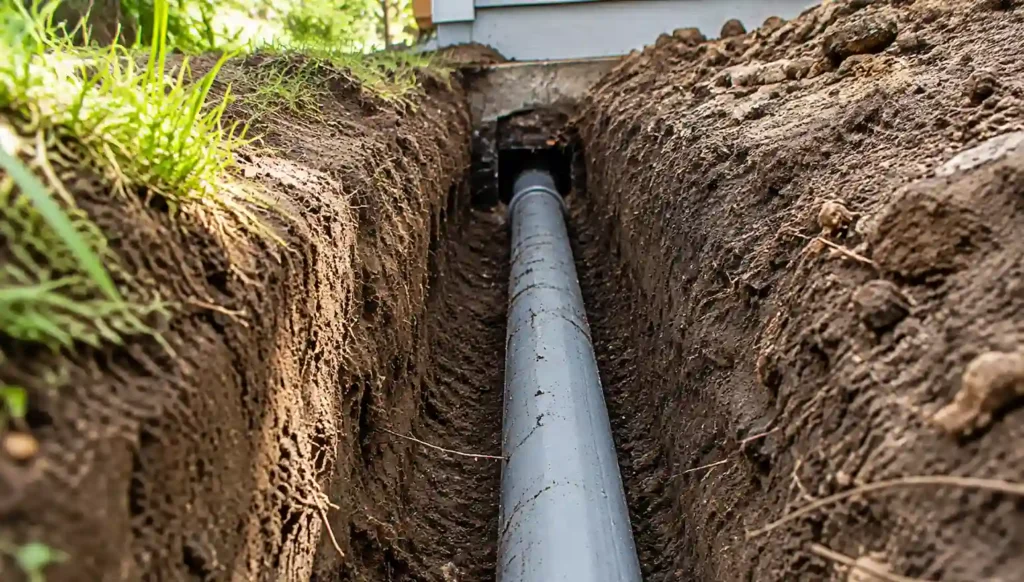
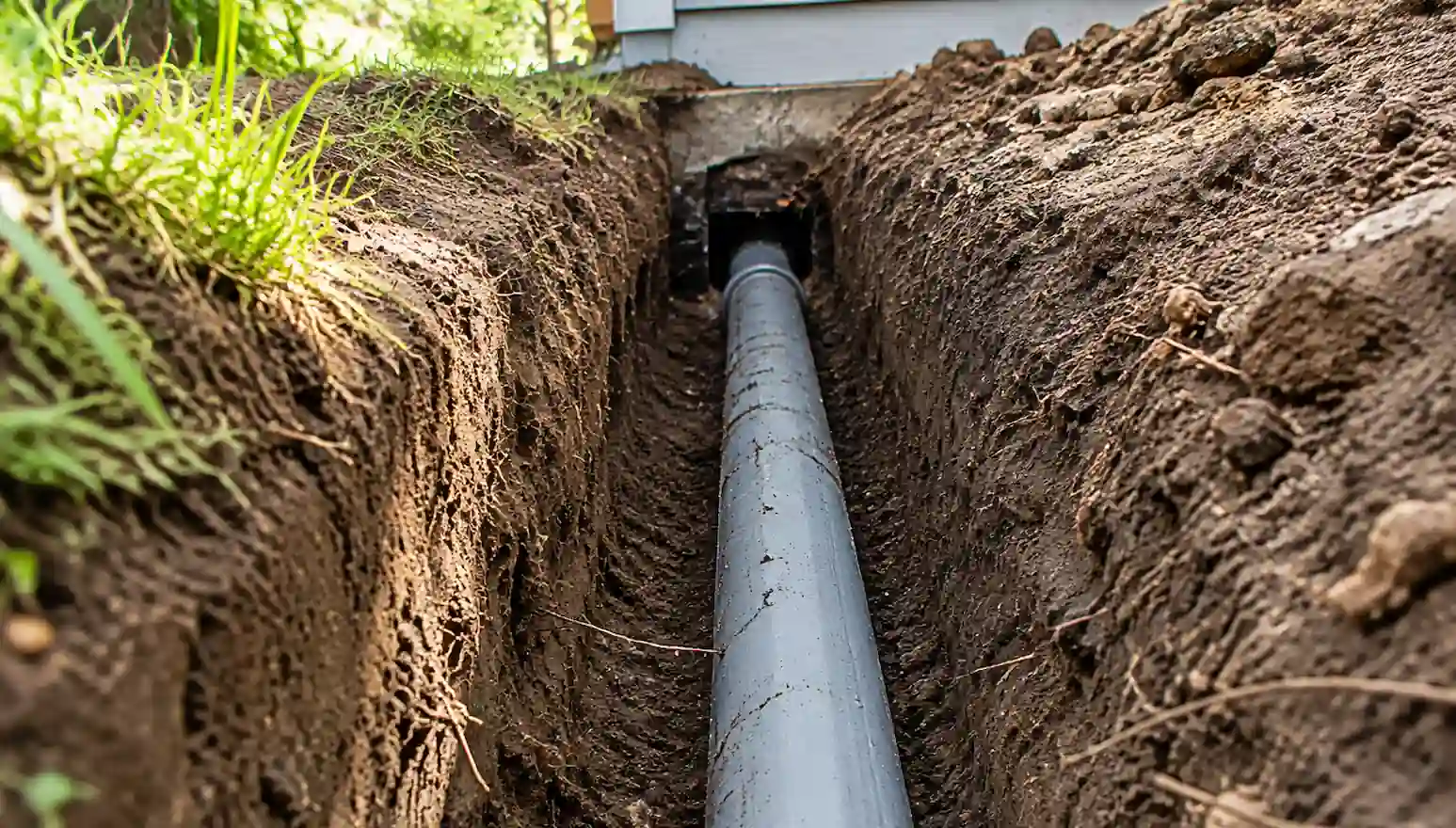
The sewer line is the primary pipe that collects combined wastewater from every drain, toilet, and fixture in the building and carries it outward to the public sewer main. It runs beneath the lowest level of the building, exits through the foundation, crosses the yard, and connects to the municipal system near the street or property boundary.
At EZ Hydro Jetting Austin, we confirm the sewer line path and access points before making any main line service recommendation. Knowing how to find my sewer line and knowing what condition the interior wall is in are part of the same diagnostic step, and we address both before any cleaning approach is discussed.
Why Sewer Line Location Determines What Service Is Possible
The location of a sewer line shapes every aspect of a main line service call before the technician pulls equipment off the truck. Pipe diameter, depth, material, and the accessibility of cleanout points all influence what equipment is needed, what nozzle configuration is appropriate, and how long the service takes. A technician arriving at a property without that information is starting from a guess, and a service estimate built on a guess tends to change once the actual conditions are visible.
For Austin residential properties, sewer line configuration varies significantly by construction era. Older properties in neighborhoods like Hyde Park, Travis Heights, and East Austin may have cast iron or clay tile lines in configurations that require different equipment settings and a different approach to cleaning than newer PVC systems in developments built after the mid-1980s.
Knowing how to find my sewer line and confirming its material before scheduling service is what gives the service provider the information to calibrate correctly from the start. The access point matters as much as the line itself. A cleanout that is accessible from inside the house without excavation changes the scope and cost of a service call compared to a property where the main access requires digging up a yard section to reach.
The Cleanout: What It Is and How to Find It
The cleanout is the primary access point for finding my sewer line in practical terms. It is a capped pipe fitting, typically three to four inches in diameter, installed at or near grade level to allow a camera or jetting equipment to enter the main sewer line without removing a fixture or excavating the pipe itself. Finding the cleanout is the most direct way to confirm where the main line runs and what the entry point for service looks like before a technician arrives.
Inside the building, the cleanout most commonly sits near the lowest bathroom in the house, in a utility or laundry room, or at the base of a main plumbing stack adjacent to an exterior wall. In Austin slab-foundation homes, which represent the majority of residential construction built after the 1960s, the cleanout fitting often appears near the perimeter of the slab at or close to floor level.
Outside the building, a secondary cleanout is typically located somewhere between the foundation and the street along the path the sewer line follows through the yard. The City of Austin requires this type of fitting for residential sewer laterals, and locating it gives the property owner the downstream reference point that, combined with the interior cleanout, traces the full path of the main sewer line across the property without requiring any professional equipment.
How to Find My Sewer Line When the Cleanout Is Not Visible
A cleanout that does not appear during a basic walkthrough of the interior and exterior perimeter of the property is not necessarily absent. In Austin properties built before the 1970s, cleanouts were sometimes installed at original grade level and then buried progressively by years of soil amendment, mulch, and landscaping activity.
Probing the soil with a thin metal rod along the foundation line in the direction the main drain exits the lowest bathroom is one reliable method for locating a buried fitting without excavating a large area. In properties with cast iron infrastructure, a metal detector locates buried cleanout caps in a fraction of the time that probing requires.
Knowing how to find my sewer line through those alternative methods is particularly relevant for Austin homeowners purchasing older properties, planning landscaping projects near the foundation line, or preparing for a main line service call and wanting to give the service provider the most complete access information available before the scheduled visit.
How Camera Inspection Answers the Location and Condition Question Together
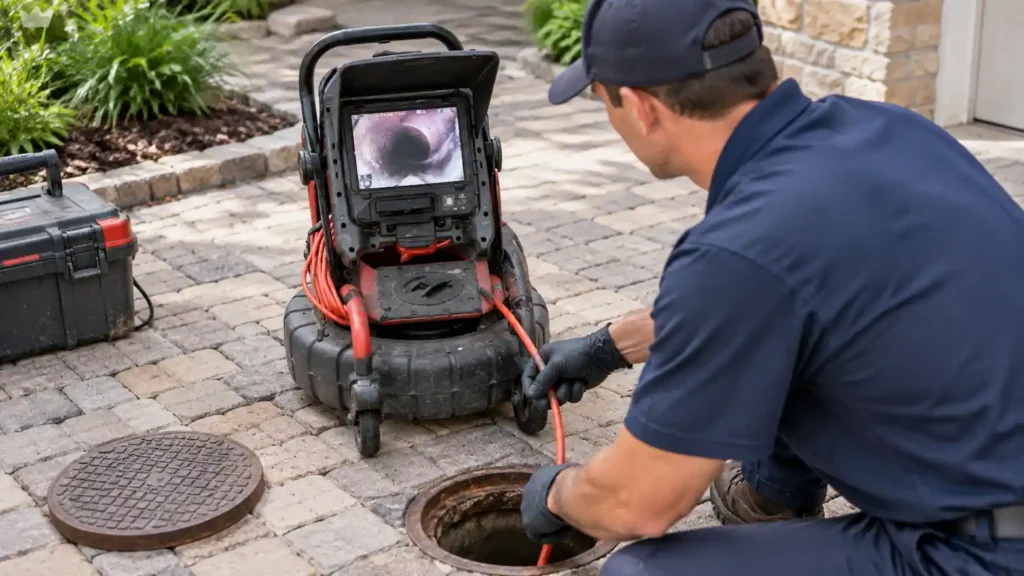
Camera inspection is the step that answers how to find my sewer line and what is inside it simultaneously. An HD camera running through the pipe from a cleanout or fixture entry point records pipe material, interior wall condition, joint integrity, the location and density of any restriction, and whether root intrusion, grease accumulation, or mineral scale is present and where it is concentrated.
For Austin properties where the sewer line has not been professionally inspected in several years, camera inspection frequently surfaces conditions that explain a recurring drain problem that previous service calls addressed one episode at a time without identifying the source. A line that was snaked twice in the same year may show a wall-layer grease accumulation thick enough to explain why both clearings produced only a temporary improvement.
Our main line hydro jetting service includes camera inspection before any high-pressure work begins because the cleaning approach that fits the pipe is determined by what the camera shows, not by the most common assumption for the symptom described.
Tracing the Sewer Line Path From the Building to the Street
Once the interior cleanout is located, tracing the sewer line path toward the street follows the direction the pipe exits the foundation. In most Austin residential properties, the line runs on a relatively direct path from the building toward the nearest municipal sewer main, which is typically located under the street or alley serving the property.
Sections of a yard that remain wetter or produce noticeably greener grass than surrounding areas during dry periods sometimes suggest the path of a line with a slow seep from a cracked joint or deteriorating pipe section. This observation is not a diagnostic tool on its own, but when combined with the direction established by the interior cleanout, it narrows the likely path of the buried line meaningfully before any probing or professional inspection is needed.
That path information is useful beyond service planning. Knowing how to find my sewer line across the full length of the property prevents accidental pipe damage during landscaping, irrigation installation, or any excavation project near the foundation or yard perimeter. It also provides the location context that makes any future repair or replacement estimate more accurate before an excavation scope is agreed to.
How to Find My Sewer Line by Construction Era in Austin
Austin sewer lines built in different eras carry different pipe materials that affect accumulation rates, root intrusion risk, and the cleaning approach appropriate for each. Clay tile and cast iron lines installed before the 1960s in older Austin neighborhoods carry decades of scale, grease, and joint exposure that have no equivalent in newer PVC systems.
Properties built between the 1960s and early 1980s frequently carry a combination of cast iron and early-generation PVC at connection points between the main sewer line and individual branch drains. Those transition zones sometimes develop joint separation or root entry vulnerability over time that a visual inspection from outside the building does not reveal.
Knowing how to find my sewer line in those properties, and specifically confirming the material at each segment the camera travels through, shapes the service recommendation in a way that a generic scope estimate does not. Post-1980s Austin properties with predominantly PVC main sewer lines carry a lower baseline risk of root intrusion and mineral scale than older materials, but still accumulate grease and soap film on the pipe wall over time.
When Locating the Sewer Line Leads to a Main Line Service Decision
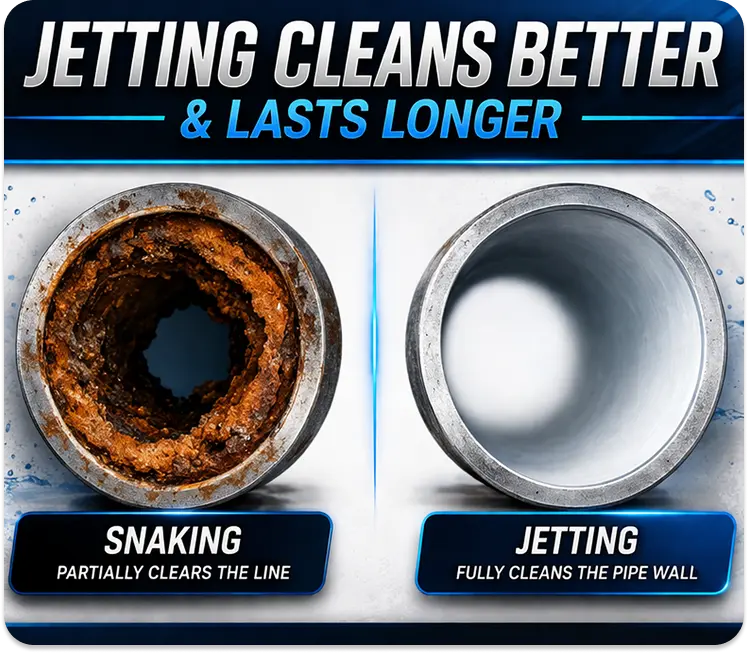
How to find my sewer line and confirm its internal condition through camera inspection is the complete diagnostic sequence that determines whether main line hydro jetting is the right next step for a specific Austin property. For lines where root intrusion, grease accumulation, or mineral scale is confirmed at a level that restricts flow capacity, high-pressure jetting with nozzle configuration matched to the type of buildup strips the restriction from the wall surface and restores the full interior diameter of the pipe.
High-pressure main line jetting is not a service that fits every confirmed restriction regardless of what the camera reveals. A main sewer line with substantial structural deterioration, collapsed sections, or severe joint displacement requires a structural repair before any high-pressure water is applied. The pre-service camera step is what surfaces those conditions in advance rather than encountering them mid-service, and that timing protects the pipe from a cleaning method it cannot support in its current structural state.
Knowing how to find my sewer line and what the camera documents inside it is what closes the gap between a service recommendation built on information and one built on assumption. Those two approaches produce different results over the same service interval, and the difference becomes clear when the problem either holds or returns within the same season.
Making the Right Main Line Decision for Your Austin Property
Every Austin sewer line has a specific location, a specific material composition, and a specific internal condition that reflects the age of the infrastructure, the local water chemistry, the surrounding landscape, and the maintenance history behind the property. Knowing how to find my sewer line is the first concrete step toward understanding what that condition is and what a well-matched service recommendation looks like before any cleaning, repair, or replacement scope is discussed.
Locating the cleanout, tracing the line path through the yard, and completing a camera inspection before approving any scope of work places the service recommendation in the context of actual confirmed pipe condition rather than a best estimate based on symptom description. That context is what makes it possible to evaluate a main line service recommendation accurately, ask the right questions before the work begins, and understand what the service is expected to accomplish given the specific condition of the pipe in the ground.
Contact EZ Hydro Jetting Austin to request a free quote and get a professional evaluation of the line condition behind your sewer line concern before committing to any service.