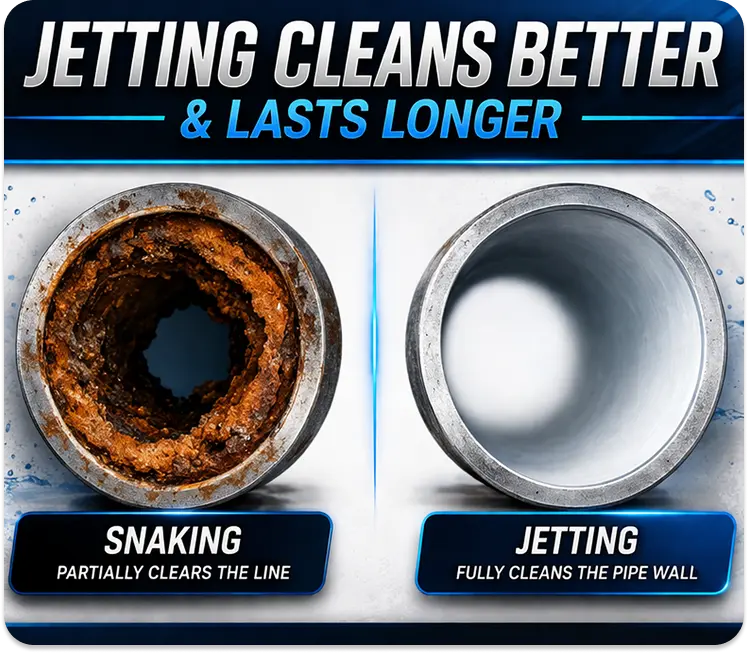
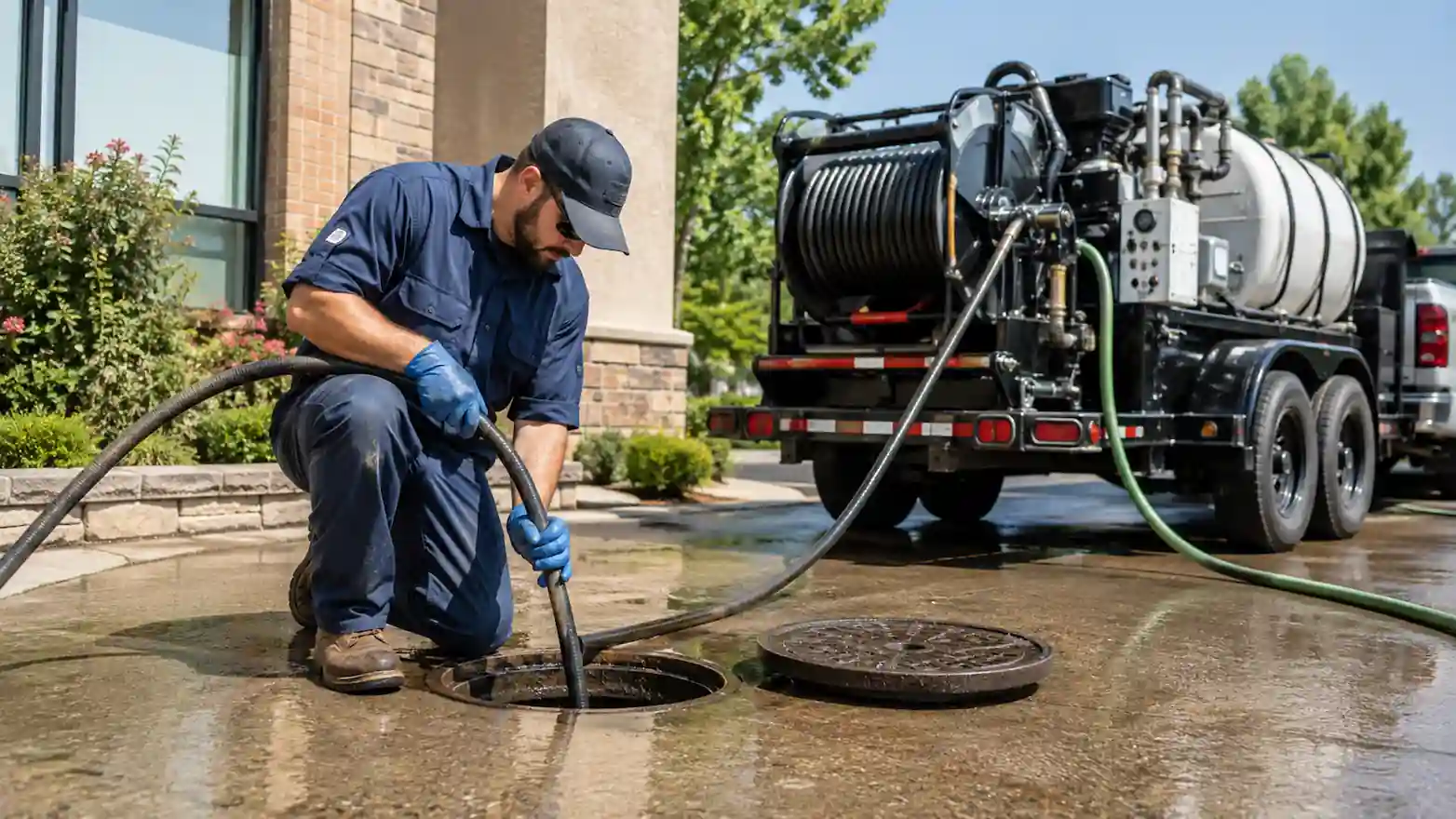
High-pressure sewer jetting sends pressurized water through a specialized nozzle inserted directly into a drain or sewer line. The water travels through the pipe under controlled pressure, stripping grease, mineral scale, sludge, root material, and compacted sediment from the interior wall and carrying the cleared material out of the system. No temporary passage gets punched through the blockage. The wall itself gets cleaned, which is where recurring sewer problems actually live.
The process is not uniform across every job. Nozzle profile, water pressure, and flow rate are calibrated to pipe diameter, pipe material, and what the technician confirms inside the line before cleaning begins. A main sewer line with dense root intrusion alongside years of sediment accumulation calls for a different configuration than a grease-heavy kitchen branch drain or a residential line with mineral scale. Running the same settings through different conditions produces results that fit the settings, not the situation.
That pre-service assessment is where the job either starts from solid information or starts from a guess. At EZ Hydro Jetting Austin, we inspect the line before recommending high-pressure sewer jetting because pipe condition and the character of the buildup are what determine the right approach. A symptom description from the surface does not provide that information, and a quote built on one reflects that gap.
How High-Pressure Sewer Jetting Compares to Other Methods
| Factor | Snaking | Hydro Jet Drain Cleaning | High-Pressure Sewer Jetting |
| Removes pipe wall buildup | No | Yes | Yes |
| Clears soft blockages | Yes | Yes | Yes |
| Handles root intrusion | Partially | Partially | Yes |
| Addresses mineral scale | No | Partially | Yes |
| Suitable for main sewer lines | Basic | Yes | Full-diameter clean |
| Camera inspection recommended | Sometimes | Yes | Essential |
| Works on structurally damaged pipes | Generally | Depends | Depends on condition |
| Recurring clog prevention | Limited | Strong | Strongest |
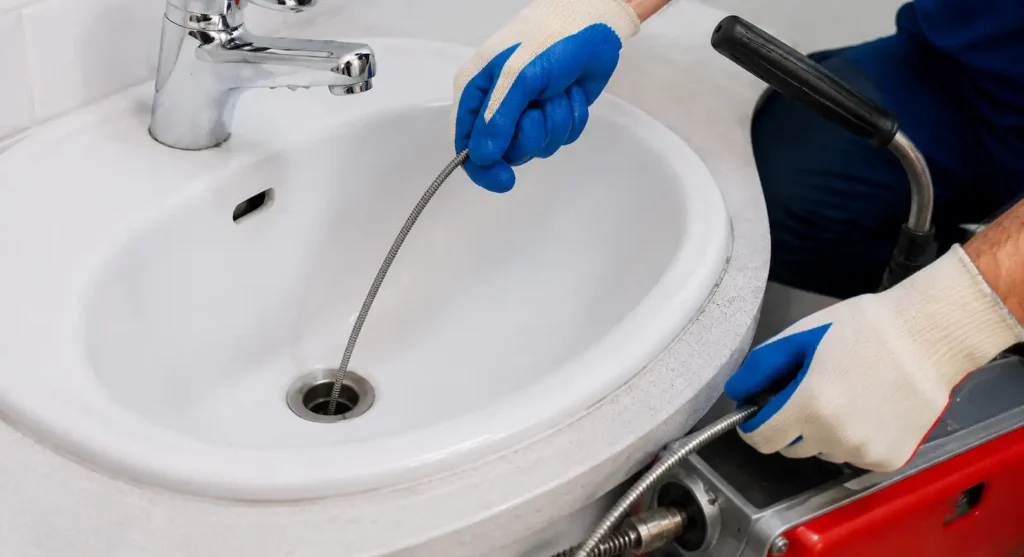
Snaking remains a practical option for soft, localized blockages in branch lines with no significant buildup history. Hydro jet drain cleaning addresses grease and moderate accumulation in residential and commercial drain lines. High-pressure sewer jetting fits best for main line work, heavy root intrusion, dense mineral scale, or any situation where thorough wall-to-wall cleaning is what the line actually needs rather than another temporary opening. The right method depends on what is inside the pipe, not on which option is fastest to book.
When High-Pressure Sewer Jetting Is the Correct Scope
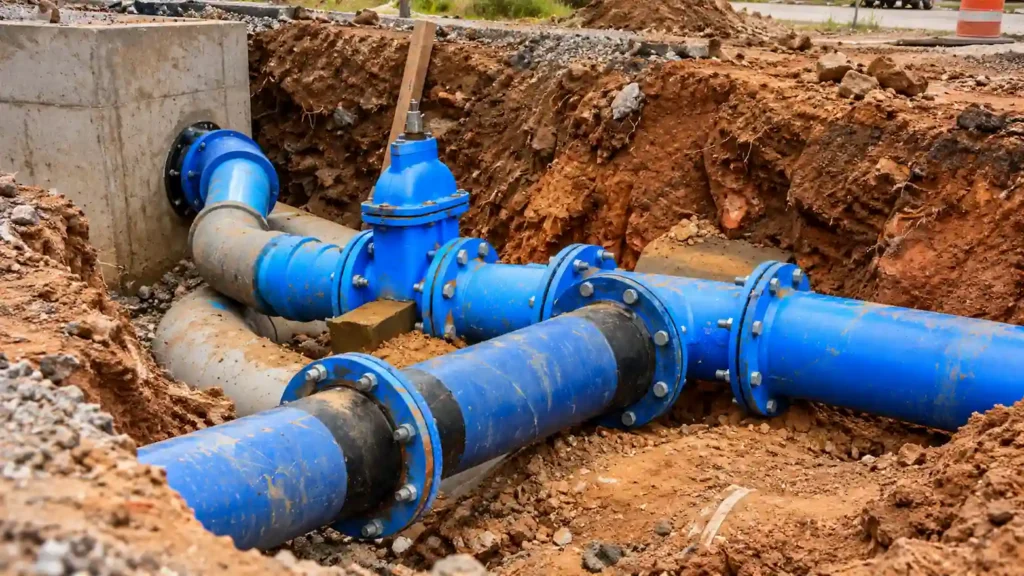
Main sewer line clogs that slow multiple fixtures simultaneously are not branch drain problems. A kitchen drain backing up at the same time the bathroom floor drain gurgles and the lowest toilet in the house takes longer to clear are not three separate issues. They are three expressions of the same restriction in the main line carrying all of that combined flow. Spot cleaning one fixture does not touch what is throttling the system. High-pressure sewer jetting at the main line level is the scope that matches the actual source.
Recurring clogs after repeated snaking point to buildup that has never been removed from the pipe wall. Each snaking service opens a temporary channel through the soft center of a blockage without touching the hardened layer bonded to the interior surface. That layer continues accumulating between services, and the interval between backups shortens over time because each new accumulation cycle starts from a thicker base than the one before it. Sewer jetting removes that layer entirely rather than reopening a passage through it again.
When High-Pressure Sewer Jetting Is Not the First Step
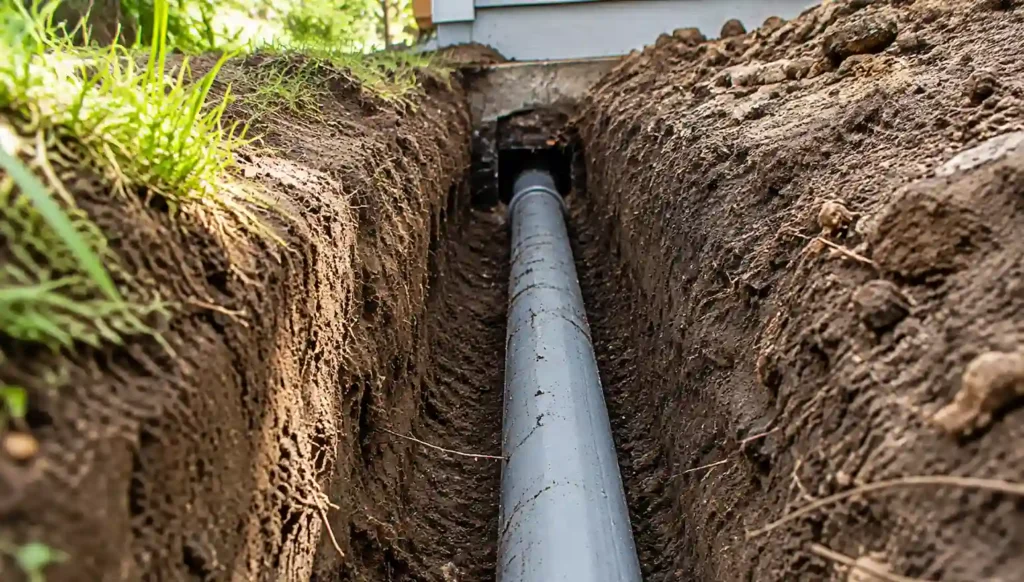
Pipes with significant structural deterioration need assessment before high-pressure cleaning. Cast iron with substantial wall loss, clay tile with cracked or displaced joints, and sections showing partial collapse on camera are situations where water at jetting pressure can worsen existing damage rather than clear the line. The answer is not to skip professional sewer cleaning but to complete a camera inspection first so the service recommendation accounts for what the pipe can actually support before pressure enters it.
Pipe bellies and significant offset joints create low points where debris collects regardless of how thoroughly the line gets cleaned. Jetting removes the accumulated material sitting in those sections, but the geometry that keeps producing the collection point does not change with water pressure alone. Knowing that before scheduling high-pressure sewer jetting sets accurate expectations about what the service resolves on its own and what requires a separate correction.
What Camera Inspection Changes Before and After Sewer Jetting
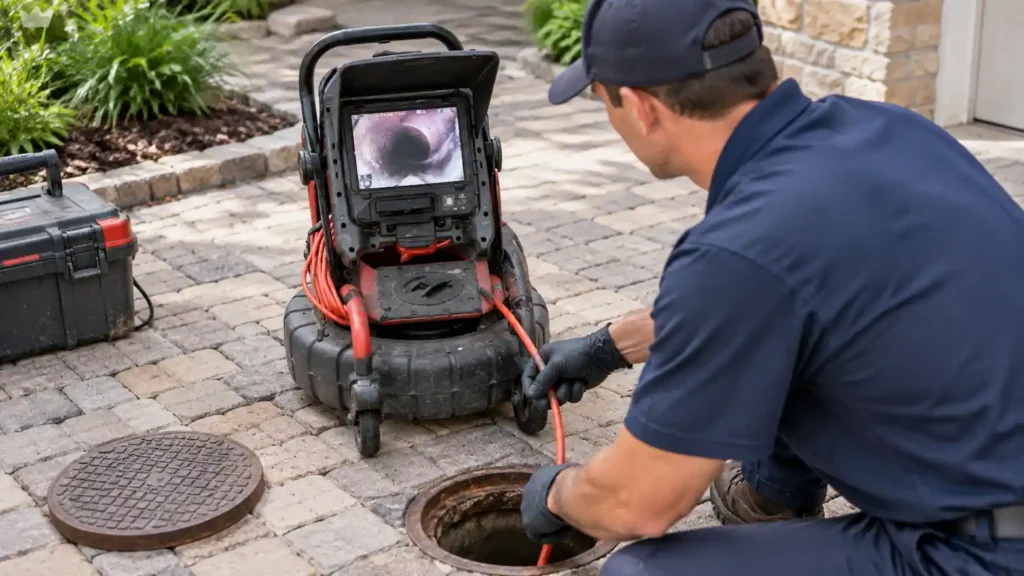
A camera run through a sewer line before jetting shows pipe material, interior wall condition, the location and character of blockages, and any structural issue that should change how the cleaning is performed or whether it should proceed as initially planned. For Austin properties with older infrastructure, that step carries particular weight. Neighborhoods like Hyde Park, Clarksville, Bouldin Creek, and Travis Heights frequently have sewer lines installed before the 1970s, carrying cast iron, clay tile, or early-generation PVC in conditions that vary significantly from one property to the next.
Camera inspection also identifies situations where high-pressure sewer jetting is appropriate but where the job needs adjustment before starting. A line with grease accumulation may require a different nozzle sequence than a line with mineral scale alone. A section with thinning walls may need reduced pressure settings through that segment while the remainder of the line receives full-pressure cleaning. None of those decisions are possible without the picture the camera provides before the nozzle goes in.
The post-jetting camera pass carries equal weight. It confirms what the cleaning removed, surfaces anything the high-pressure sewer jetting alone did not fully resolve, and produces a documented condition record for the line. Property owners, landlords, and commercial operators use that record to schedule the next service from a position of actual knowledge rather than from a guess about when the next problem might surface.
What a Main Line Clog Is Actually Telling You
A main line clog is not a localized fixture problem that got worse. It is a restriction in the pipe handling combined flow from every drain and fixture in the building, and it registers across all of them at the same time. The pattern of how that restriction shows up carries diagnostic information that points to what caused it. Grease accumulation tends to develop gradually, producing progressively slower drains across multiple areas before flow stops entirely.
Sediment buildup in lines with grade problems or pipe bellies produces standing water and recurring slow drains even when no distinct clog is present. The material collects at the low point, accumulates over time, and restricts flow at a location that keeps refilling regardless of cleaning frequency because the geometry of the pipe is what creates the collection point. High-pressure sewer jetting removes the sediment from those sections but does not change the grade or correct the belly.
Each pattern points to a different underlying condition, and each condition informs what the sewer jetting needs to accomplish during the service. A technician who asks about the history of the problem, the pattern of the symptoms, and what previous service attempts produced is gathering information that changes the recommendation. One who quotes a service without those questions is not.
How Grease, Scale, and Sediment Each Respond to High-Pressure Sewer Jetting
Grease accumulates on pipe walls gradually, narrowing the interior diameter of the line without producing a sudden blockage until the restriction becomes severe under operating volume. It responds well to high-pressure jetting with a rotating or rear-facing nozzle that shears the layer from the wall and carries the material through and out of the system. Chemical treatments and snaking address surface grease without removing the bonded accumulation beneath it.
Mineral scale forms through the progressive deposit of calcium, magnesium, and other dissolved minerals onto the pipe wall. Central Texas water is consistently high in mineral content, and Austin sewer lines accumulate scale at a rate that reflects that local chemistry. Scale responds to high-pressure water but requires adequate nozzle force to fracture and dislodge what has hardened against the pipe surface. Pressure settings for scale buildup are typically higher than those used for grease and require pipe wall integrity confirmation before application.
Sediment in main sewer lines with grade issues accumulates independently of how often the line gets cleaned, because the pipe geometry creates the collection point. High-pressure sewer jetting flushes the sediment present at the time of service, but the belly or grade problem that keeps producing it remains. Setting clear expectations before the job prevents misunderstanding about what sewer cleaning will and will not resolve when the structural condition is what keeps generating the accumulation.
How to Evaluate a High-Pressure Sewer Jetting Provider
| What to Ask | Why the Answer Matters |
| Do you camera inspect before jetting? | Shows whether diagnosis precedes cleaning |
| What equipment capacity do you use for main lines? | Confirms the service matches the scope |
| What if jetting is not appropriate for the pipe? | Reveals honesty about service fit |
| Do you provide post-jetting camera confirmation? | Demonstrates accountability for the result |
| How do you handle root intrusion with structural damage? | Indicates depth of the diagnostic process |
A legitimate high-pressure jetting provider does not quote a main line service without understanding the pipe material, the installation era, and the history of the problem. Equipment capacity for main line work is not the same as equipment for branch drain cleaning. Nozzle selection for root intrusion is not the same as nozzle selection for grease or scale.
Making the Right Sewer Cleaning Decision
Every sewer line carries a service history, and that history is the most accurate starting point for any cleaning recommendation. Pipe material, installation era, root exposure from surrounding landscaping, the nature of daily drain use, and the pattern of previous blockages together tell a clearer story about what a service needs to accomplish than any single symptom alone.
High-pressure sewer jetting is not too aggressive for most main sewer lines in serviceable condition, and it is not the correct scope for every situation regardless of what is inside the pipe. The right recommendation depends on documented pipe condition, structural integrity of the wall, and whether any factor is driving the accumulation pattern that cleaning alone cannot resolve. That determination requires inspection before service, not a quote built on symptom description from the surface.
Contact EZ Hydro Jetting Austin to request a drain evaluation built around the actual blockage, and get a clear picture of your sewer line before committing to any service.