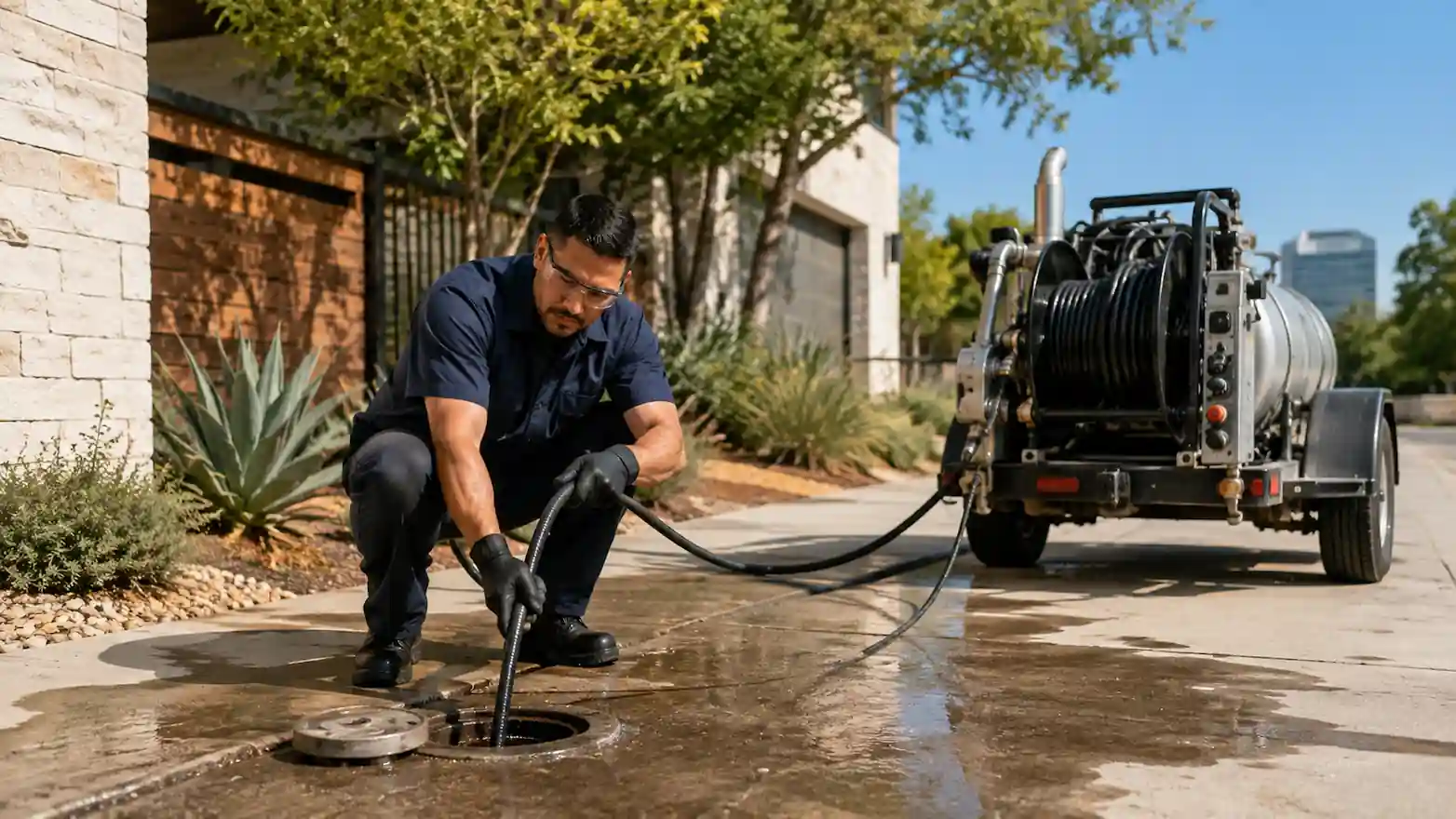
Drain jetting services clean the interior walls of a drain or sewer line using pressurized water pushed through a specialized nozzle. The water does not displace a blockage or push it further down the pipe. It shears grease, mineral scale, sludge, soap accumulation, and compacted debris off the pipe surface and flushes the material out of the system. What gets left behind after a thorough clean is a pipe with recovered interior flow capacity, not a temporary channel through whatever had built up since the previous service call.
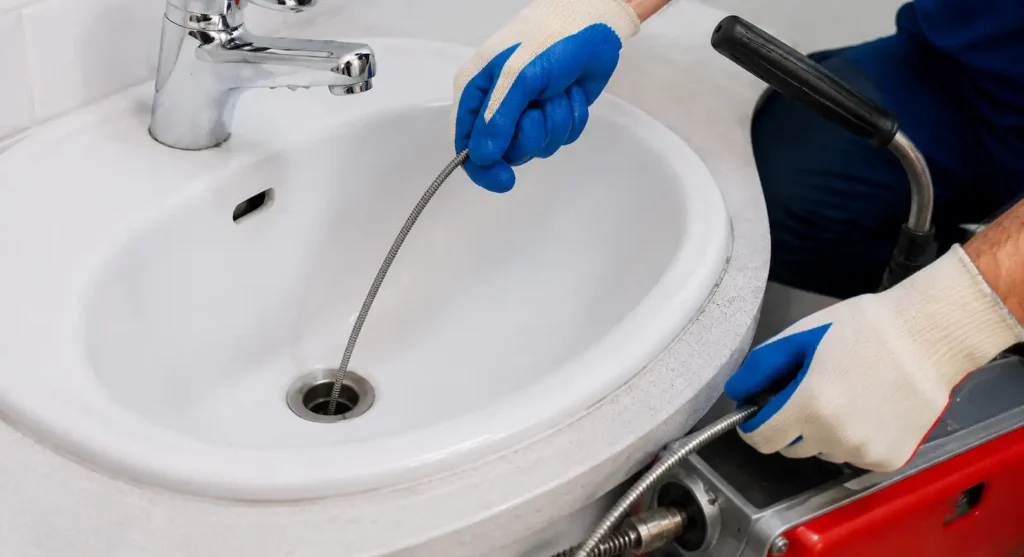
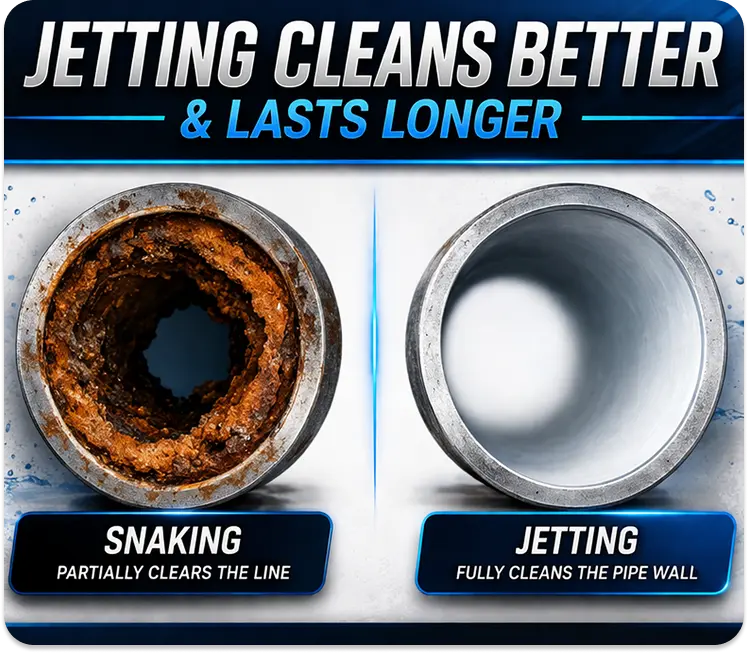
That difference in outcome is the practical reason drain jetting services produce longer-lasting results than snaking on lines with buildup history. Snaking creates a passage through the soft center of a clog. The layer bonded to the pipe wall stays in place, continues accumulating between services, and restricts flow again on a shorter timeline each time because it is starting from a thicker base. Jetting removes that layer from the surface, which is where the recurring problem actually originates.
The right drain jetting service begins before the nozzle enters the pipe. Pressure level, nozzle configuration, and equipment capacity all depend on pipe material, diameter, and what the technician finds inside the line before cleaning starts. At EZ Hydro Jetting Austin, we inspect the line before recommending a cleaning approach because pipe condition and buildup type determine the correct service, not a symptom description from the outside.
Drain Jetting Services vs. Snaking: A Direct Comparison
| Factor | Drain Snaking | Drain Jetting Services |
| Removes pipe wall buildup | No | Yes |
| Clears soft blockages | Yes | Yes |
| Addresses grease accumulation | Partially | Yes |
| Suitable for main sewer lines | Basic | Full-diameter clean |
| Camera inspection recommended | Sometimes | Yes |
| Works on structurally damaged pipes | Generally yes | Depends on condition |
| Recurring clog prevention | Limited | Strong |
| Chemical use | None | None |
Snaking works well for soft, localized blockages in lines with no significant buildup history. Drain jetting services fit better when a line has recurring problems, grease accumulation, mineral scale, or when the main sewer line needs a real clean rather than a temporary opening. The right service depends on what is inside the pipe, not on which option costs less upfront or takes less time to schedule.
When Drain Jetting Services Are the Right Call
Recurring clogs after previous cleanings are the clearest signal that the cause was not addressed. If a drain was cleared and the same problem returned within weeks or a couple of months, the residual buildup on the pipe wall continued accumulating from where the last service left off. Drain jetting removes that layer entirely rather than opening another temporary passage through it, which is why the interval between problems tends to extend significantly after a proper high-pressure clean.
Slow drains across multiple fixtures simultaneously point to a restriction further downstream than any single localized clog. A sluggish kitchen sink is one situation. A kitchen sink, a bathroom drain, and a utility connection all running slow at the same time point to something happening in the main line, not in a branch. That requires a different scope of service and different equipment than clearing one fixture near the surface.
High-use commercial systems accumulate buildup faster than routine cleaning methods can address. Restaurant kitchen lines processing heavy grease output daily, floor drains in commercial facilities, and high-traffic restroom systems in office and retail buildings develop restrictions at a pace that occasional snaking cannot keep ahead of. Drain jetting services scaled for commercial drain systems account for that volume and can be scheduled at regular intervals to maintain functional capacity before restriction becomes a service interruption.
When Drain Jetting Services May Not Be the First Step
Pipes with significant structural deterioration may not tolerate high-pressure water without additional risk. Cast iron with substantial wall loss, clay tile with cracked or displaced joints, and sections that show partial collapse or misalignment on camera are situations where applying pressure without completing structural repairs can worsen existing damage. The answer is not to avoid professional drain cleaning but to inspect before deciding which method the pipe’s current condition can support.
Root intrusion is a condition where drain jetting services clear what is visible without permanently resolving the source. Roots that have grown into a line through a cracked joint or deteriorating pipe connection will regrow after being removed if the structural entry point remains open. Jetting cuts and flushes the root material inside the pipe at the time of service, but a camera inspection after the clean identifies whether the entry point requires a separate structural repair to prevent the same cycle from restarting.
Pipe bellies, offset joints, and sections with standing water from grade problems are conditions where jetting addresses flow restriction without correcting the geometry that keeps producing the collection point. Knowing that before scheduling a clean prevents paying for a service that matches the symptom but not the actual source of the recurring problem.
How Camera Inspection Shapes the Service Recommendation
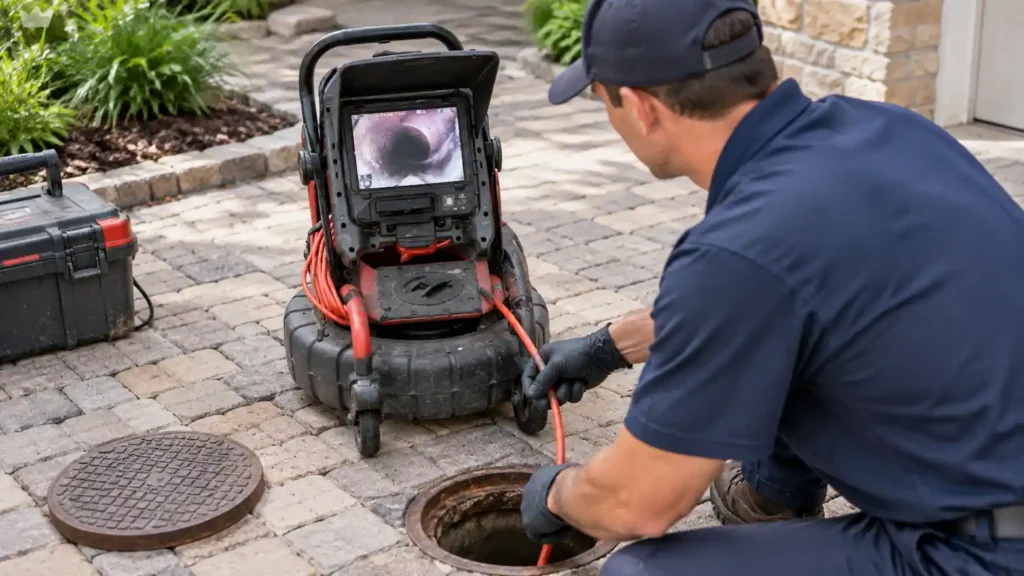
An HD camera run through a line before jetting shows pipe material, interior wall condition, the location and character of blockages, and any structural issue that should change how cleaning is performed or whether it should proceed as initially planned. For older Austin properties, this step carries particular weight. Homes built before the 1970s in neighborhoods like Hyde Park, Clarksville, Travis Heights, and Bouldin Creek frequently have original cast iron or clay tile lines with decades of mineral scale alongside legitimate structural wear.
Camera inspection also identifies situations where drain jetting services are appropriate but where the scope of the job needs adjustment before starting. A line with root intrusion alongside grease buildup may require a different nozzle sequence than a line with mineral scale alone. A pipe section with thinning walls may need reduced pressure settings through that segment while the rest of the line receives full-pressure cleaning. None of those adjustments are possible without the picture the camera provides first.
The post-jetting camera pass carries equal practical value. It confirms what the cleaning removed, identifies anything the water alone did not fully resolve, and produces a documented record of pipe condition that property managers and commercial operators can use to schedule future service from an informed position rather than from a guess about when the next problem might surface. Our HD camera inspection service is available as a standalone evaluation before any high-pressure drain work begins.
Main Sewer Line Cleaning vs. Spot Drain Jetting
| Factor | Spot Drain Jetting | Main Sewer Line Jetting |
| Scope | Single fixture or branch line | Full building drain system |
| Equipment capacity | Standard | Higher volume |
| Root intrusion frequency | Low | Common in Central Texas |
| Camera inspection value | Recommended | Essential |
| Typical service time | Under 2 hours | 2 to 4 hours |
| When it applies | Localized clog or buildup | Systemic slow drains, backups, recurring issues |
A main sewer line carries the combined output of every fixture and drain in a building. Partial buildup in that line affects the entire property simultaneously. Slow drains across several areas of the house, gurgling from floor drains after flushing a toilet, or recurring backups in the lowest fixture in the building are not isolated problems. They point to the main line, and spot cleaning a branch drain produces temporary improvement near the service point while leaving the actual source of the problem untouched.
What Grease Buildup Does to a Drain Line Over Time
Grease leaves a kitchen hot and in liquid form and moves through the line without resistance until it reaches a section of pipe cool enough to slow it down. At that point, it begins adhering to the wall, solidifying in layers, and progressively narrowing the interior diameter of the pipe. The drain continues to function through this process because the center of the pipe stays open, but flow becomes slower in increments that often go unnoticed until the restriction becomes significant enough to stop the line under operating volume.
Chemical treatments soften the surface of a grease layer temporarily without removing what has hardened beneath it. The softened portion moves downstream and often re-solidifies in a cooler section, shifting the point of restriction rather than clearing the accumulated material. Snaking cuts through the soft core of a grease mass and restores flow, but the hardened accumulation surrounding that opening stays in place and picks up from where it left off the moment the kitchen returns to normal use.
Drain jetting services with a nozzle configured for grease removal shear the layer from the wall and carry the material out of the system rather than displacing it. For Austin restaurant kitchens and commercial food service operations running back-to-back service periods, that difference separates a drain line that holds up under daily volume from one that backs up mid-service and forces the kind of operational disruption that no advance notice prevents.
How to Choose Drain Jetting Services That Actually Solve the Problem
| What to Ask | Why the Answer Matters |
| Do you inspect before jetting? | Shows whether diagnosis comes before service |
| Is camera inspection included? | Reflects commitment to finding the actual cause |
| What if jetting is not the right fit? | Reveals honesty about service limitations |
| Do you handle main sewer lines? | Confirms equipment capacity and scope |
| What does the post-jetting camera show? | Demonstrates accountability for the result |
A provider that quotes drain jetting services without asking about pipe history, the nature of the symptoms, or what previous cleaning attempts produced is not starting from a diagnosis. Pressure settings, nozzle selection, and equipment capacity are not uniform across drain types and job scopes. A kitchen line with heavy grease accumulation and a main sewer line with root intrusion alongside sediment buildup are different jobs that require different configurations. A flat quote applied without that context is worth examining before committing to a service call.
Making the Right Call for Your Drain System
Every drain problem has a service history, and that history is the most useful starting point for any cleaning recommendation. Pipe material, age, the type and volume of what goes down the drain, how frequently the line has been serviced, and what the current symptoms look like together produce a more accurate picture of the actual cause than any one factor alone. A provider who treats that context as the basis for a recommendation is more likely to solve the problem than one who defaults to the most common service for the symptom described over the phone.
Drain jetting services are not the automatic answer for every blocked or slow-running drain, and they are not too aggressive for most lines in serviceable condition. The correct recommendation depends on what is documented inside the pipe, the state of the wall, and whether any structural condition is driving the pattern that keeps producing the same problem on a shortening interval. That level of specificity requires inspection before service, not an estimate based on symptom description alone.
Contact EZ Hydro Jetting Austin to schedule drain jetting support for a cleaner main line, and get a clear picture of what is happening inside your drain system before committing to any service.