
Clogged sink drains are drain lines that have developed a restriction significant enough to slow or stop the flow of water through the pipe under normal household use. That restriction may sit close to the fixture opening, deep in a branch line, or further downstream in the main sewer line depending on the material that caused it and how long it has been accumulating. Where the restriction sits determines what service addresses it, and that location is not always apparent from the symptom at the drain.
A drain that backs up once after a large meal describes a different situation than a drain that slows progressively over three months and stops responding to everything tried at the fixture level. A drain affecting one sink describes a different cause than clogged drains appearing across the kitchen, a bathroom, and a utility connection in the same week. Reading those differences before scheduling service is what makes it possible to match the scope and method of the response to the actual problem rather than the most visible symptom.
At EZ Hydro Jetting Austin, we assess the cause and location of clogged drains before recommending how to address them. That assessment step is not a delay. It is what produces a service recommendation that fits the specific pipe and the specific accumulation rather than the most common assumption for the category of symptom described.
What Drives Kitchen Clogged Sink Drains in Austin Homes
Kitchen drain lines in Austin homes accumulate grease, food solids, and dish soap in progressive layers on the pipe wall rather than in a single soft mass at the drain opening. Grease travels through the line as hot liquid after cooking and cleaning, contacts the cooler interior wall of the pipe partway through the line, and begins solidifying in thin layers that compound over months.
Food particles and soap film integrate into that grease layer on contact rather than passing through the line cleanly. The combined accumulation is denser and more adhesive than grease alone, and it bonds to the pipe wall more tenaciously than a surface clearing reaches. A kitchen sink that cleared after a service call and returned to restricted flow within two months is almost always describing that wall-layer dynamic rather than a new, unrelated blockage forming from scratch.
Disposal units accelerate kitchen clogged sink drains by introducing ground food waste that does not fully suspend in water and settles in slower sections of the drain line. That settled material compounds whatever grease and soap film has already accumulated on the pipe wall, producing a denser and more varied restriction than either source alone would create.
Why Bathroom Clogged Sink Drains Return Faster Than Expected
Bathroom clogged sink drains form from hair, soap scum, toothpaste residue, and personal care product accumulation rather than grease or food waste. The restriction forms close to the fixture in the p-trap or the first section of the branch line rather than deep in the drain system. That shallow position makes bathroom sink clogs more accessible than kitchen grease buildups, but the residue layer bonded to the pipe wall immediately beneath the visible clog is what shortens the interval between cleared drains and the next restriction.
When only the surface clog gets removed, the residue layer stays on the wall and gives the next hair accumulation a better grip point than a clean pipe surface would. Each clearing cycle starts from a thicker base than the previous one, and the interval between clogged sink drains shortens accordingly. A bathroom sink on a two-to-three-week recurrence cycle after each clearing is running that pattern, not producing independent new blockages from scratch each time.
Mineral scale from Central Texas water chemistry adds a layer to that bathroom accumulation over time. Calcium and magnesium deposits from the local water supply coat the interior of drain lines progressively, roughen the surface, and give soap scum and hair a more adhesive surface than a smooth pipe wall presents.
Professional Clogged Sink Drains Assessment: What Actually Gets Checked
A professional clogged sink drain assessment opens with questions about the symptom history before any tool approaches the line. How long has the restriction been developing? Did the same drain return to slow flow after a previous service? Are other fixtures in the house running differently than they were six months ago? What does the affected sink handle in daily use and at what volume? Those questions produce the pattern of the problem, and the pattern is what points toward the cause before camera inspection begins.
Camera inspection follows for any situation where the history indicates a cause deeper than the fixture level. An HD camera traveling through the drain line shows pipe material, interior wall condition, the location and density of the restriction, joint integrity, root presence if any, and any structural issue that should affect how cleaning is performed.
For older Austin properties with original cast iron or clay tile drain infrastructure, that camera step is what protects the pipe from a cleaning method it cannot support in its current structural condition. A line with significant wall loss, cracked joints, or sections showing displacement on camera requires a different sequence than a healthy PVC line with a fresh grease accumulation, and knowing which one applies before any pressure enters the pipe is what that inspection produces.
Clogged Sink Drains: Three Cleaning Methods Compared
| Factor | Chemical Drain Cleaner | Snaking | Hydro Jetting |
| Removes pipe wall buildup | No | No | Yes |
| Clears soft blockages | Sometimes | Yes | Yes |
| Addresses grease accumulation | Partially | No | Yes |
| Handles mineral scale | No | No | Yes |
| Safe for all pipe types | No | Generally | Depends on condition |
| Prevents recurring clogs | No | Limited | Strong |
| Camera inspection recommended | No | Sometimes | Yes |
| Appropriate for main line clogs | No | Basic | Full-diameter clean |
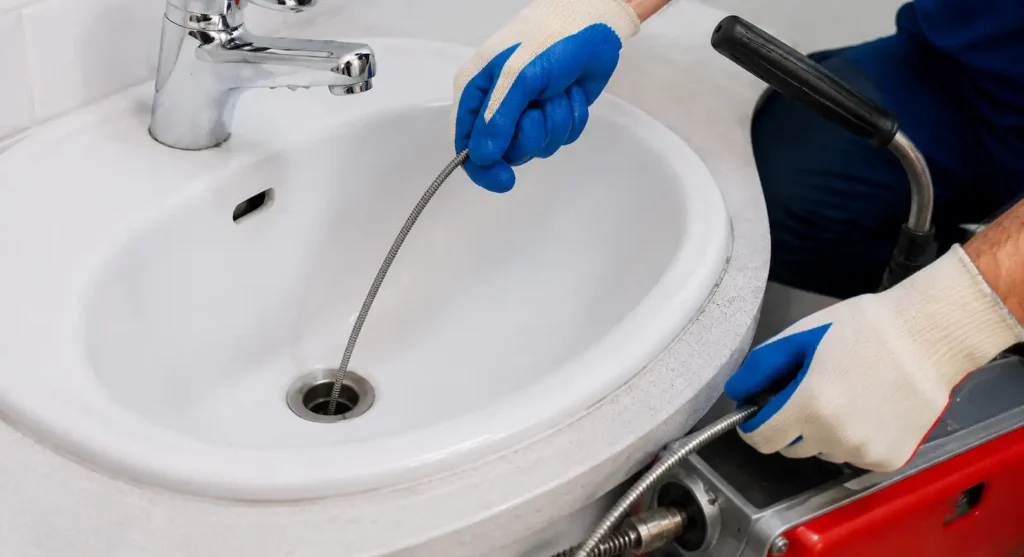
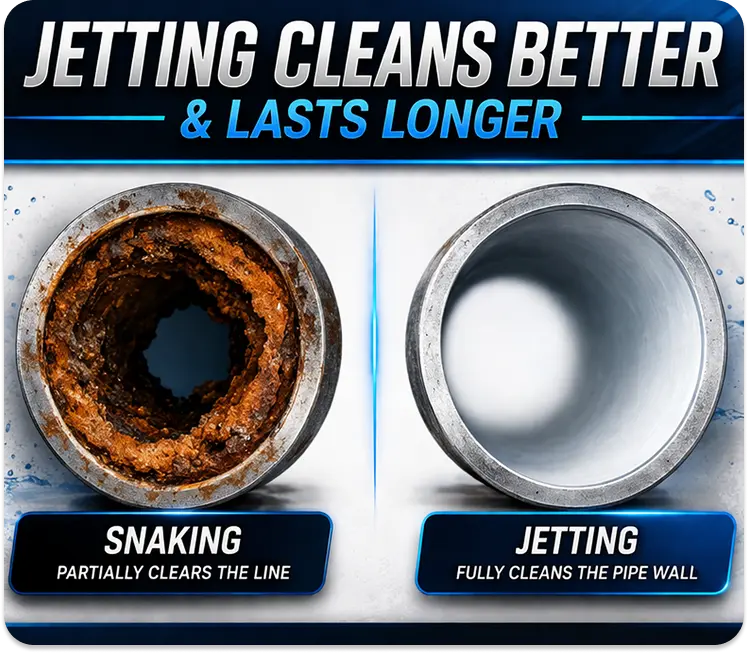
Chemical drain cleaners soften surface organic material near the drain opening without reaching what has hardened deeper in the line. Snaking clears the soft center of clogged sink drains without touching the wall layer that keeps producing the restriction on a shortening interval. Hydro jetting strips that wall layer from the interior pipe surface and carries the material out of the system, producing results that last measurably longer on any line where accumulation history is the actual driver.
How to Choose the Right Service for Clogged Sink Drains in Austin
| Situation | First Step | Likely Next Step |
| First-time soft clog, no recurrence | Snaking or monitor | No further service if drain clears |
| Clog returned after previous clearing | Camera inspection | Hydro jetting |
| Multiple fixtures slow at the same time | Camera inspection | Main line assessment |
| Older home, pipe material unknown | Camera inspection | Depends on confirmed condition |
| Kitchen line with recurring grease clog | Camera inspection | Hydro jetting |
| Bathroom drain on short recurrence cycle | Camera inspection | Hydro jetting |
| Gurgling sounds from other fixtures | Camera inspection | Main line service |
This decision framework answers the practical question of what to do first without requiring a professional on-site assessment to make the initial determination. A first-time soft clog in a line with no accumulation history and no other affected fixtures warrants a basic response before escalating to camera inspection.
Austin Residential Hydro Jetting Guidance for Recurring Clogged Sink Drains
Clogged sink drains that have returned after previous service, that involve multiple fixtures simultaneously, or where grease accumulation or mineral scale is confirmed by camera are situations where high-pressure jetting addresses what snaking cannot. The nozzle configuration matched to the type of buildup present strips the accumulation layer from the wall surface and carries the cleared material out of the system entirely rather than pushing it to a cooler section downstream where it re-solidifies and begins the same process again.
For Austin kitchen lines running heavy daily cooking output, that wall-layer reset changes how long the line holds up between service calls in a way that repeated snaking does not. For bathroom branch drains on a short recurrence cycle, jetting removes the soap scum and mineral scale layer that gives each new hair accumulation its grip point, extending the interval between restrictions rather than just advancing the next episode a few weeks further on the calendar.
Our residential hydro jetting service is calibrated to the pipe condition and the composition of the buildup confirmed by camera inspection before the service begins, not to a standard residential setting applied uniformly to every clogged sink drain regardless of what is actually inside the line.
What Clogged Sink Drains Reveal About Long-Term Pipe Condition
A drain that clears and returns on a progressively shorter cycle is not just describing a recurring nuisance. It is documenting a wall-layer accumulation that gets thicker and more resistant with each clearing cycle that leaves it in place. The composition of what is bonded to the pipe wall after five years of grease accumulation without a professional clean is categorically different from what is there after six months, and the method that cleared it in year one may not produce the same result in year five.
That progressive accumulation also affects the pipe surface itself over time in lines with older materials. Mineral scale bonded to cast iron or clay tile interacts with the pipe wall differently than it does with PVC, and a camera inspection in a property that has experienced clogged sink drains repeatedly across several years sometimes shows wall condition changes alongside the accumulation that explain why the restriction profile is more resistant than it was during earlier service calls.
Understanding that timeline is what makes pre-service camera inspection useful beyond just the current call. It produces a documented baseline of pipe condition and accumulation composition that shapes not just what gets recommended today but what maintenance interval makes sense for that specific line going forward.
Making the Right Clogged Sink Drain Decision for Your Austin Property
Every clogged sink drain has a cause that the right cleaning method either reaches or misses. Fixture type, daily drain use, pipe age and material, recurrence pattern, and whether other drains in the house are involved together point toward the actual source of the restriction more reliably than the symptom at the drain opening alone. Reading that combination before scheduling service is what makes the difference between a result that holds and one that sets a clock for the next call.
A first-time soft clog in a recently serviced line with no prior history is a different situation than clogged sink drains that have returned repeatedly in a line that has never had a professional clean. The first may clear with a basic service. The second needs a camera confirmation of what is on the pipe wall and a service that reaches what is actually there rather than what the symptom suggests from the surface.
Contact EZ Hydro Jetting Austin to schedule an inspection for your clogged sink drains and confirm whether jetting or another drain service is the right next step for the specific condition of your line.