Where are sewer lines located is the question that makes every main line service conversation more accurate and every main line service call more efficient. The answer isn’t some abstract notion of plumbing. It’s the specific physical information that tells you where the pipe is, what the job will require in terms of equipment and what the access point is. That information is also the thing that protects the property from damage to the pipe during yard work and is the thing that enables you to give an accurate estimate of the cost of any future repair prior to even discussing the scope of excavation.
A residential sewer line is the main buried pipe which takes the combined wastewater from every toilet, every sink, every shower, every floor drain and every appliance connection in the building to the public sewer main at or near the property boundary. All the drains in the house feed into that one pipe so it’s why if there’s a restriction in the line it will affect the whole house at once rather than just showing up at one fixture and then spreading.
At EZ Hydro Jetting Austin, we will confirm the location of the sewer line and the access conditions prior to making any main line service recommendation. It’s only by knowing where are sewer lines located and confirming the internal condition of the pipe via camera inspection that you can produce the complete picture that any accurate main line service recommendation is based on.
Where Are Sewer Lines Located in Austin Residential Properties
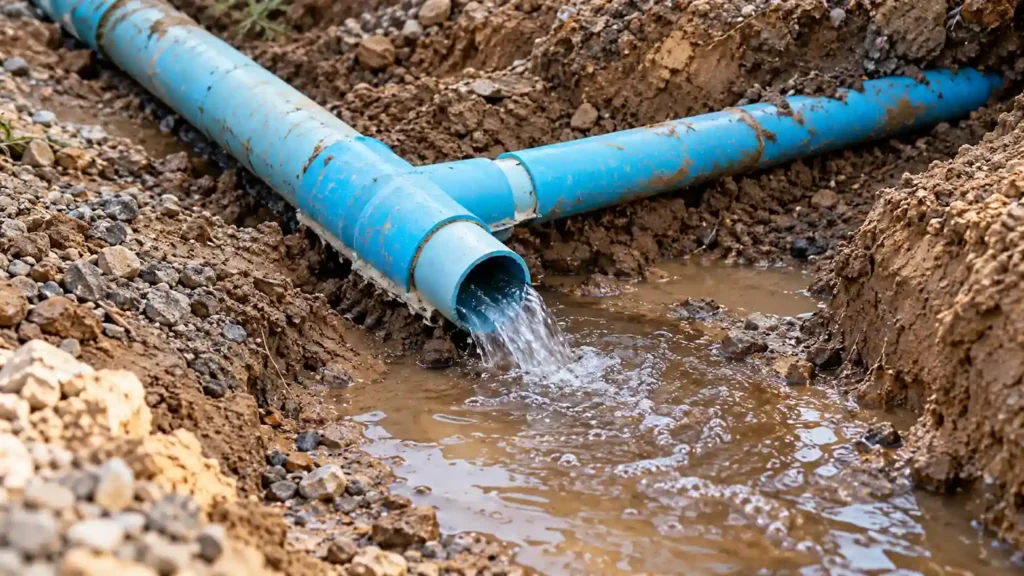
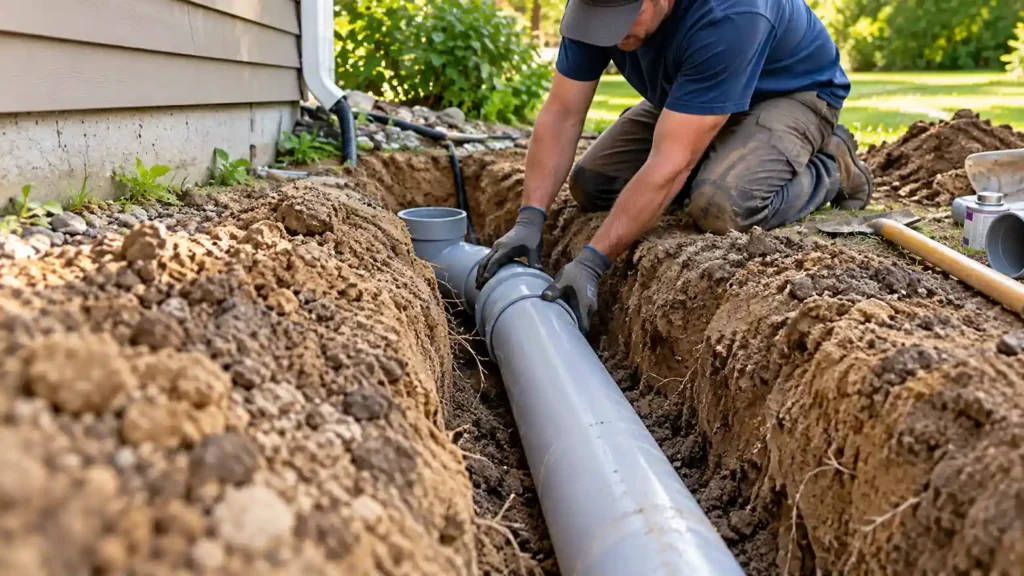
Most residential sewer lines in Austin run horizontally underneath the lowest level of the building, exit through the foundation, cross the yard at a continuous downward gradient and then connect to the public sewer main either just off the street or at the back of the property in the alley. That’s the general path of the residential sewer line in Austin, though the actual routing will of course vary depending on the grade of the lot, the position of the building on the property and any topographic or infrastructure constraints that would have dictated the original routing.
In slab foundation homes (which is the majority of Austin residential construction post early 1960s) the sewer line runs underneath the concrete slab and comes out at the perimeter. In pier and beam homes (which are more common in the older Austin neighborhoods such as Hyde Park, Clarksville and various areas of South Austin) the line may run under the floor structure and is accessible from the crawl space underneath the house.
Where are sewer lines located in relation to the street is going to vary depending on which public main the lateral connects to. Most residential properties in Austin will connect to a street side main with the lateral running from the building to the street. Some of the older properties in areas that have alley access will connect to an alley main with the lateral running to the rear of the lot.
Where Are Sewer Lines Located When the Cleanout Is Not Visible
A cleanout that you don’t see during a walkthrough of the inside and outside of the property isn’t necessarily missing. In Austin homes predating the late 1960s the cleanout fittings that were originally installed at grade have often been buried by many years of soil build-up, landscaping and yard amendment which has raised the grade of the yard above the fitting. A cleanout cap installed at grade in 1965 may well now be 10 to 14 inches below the surface in a yard that has been amended and replanted consistently over the years.
Probing the soil with a thin metal rod along the foundation line in the direction that the main drain takes as it leaves the lowest bathroom is a very reliable method of finding a buried fitting without having to go right around the entire yard. A metal detector is a very effective way of locating the buried cast iron caps in a property that has the original iron system.
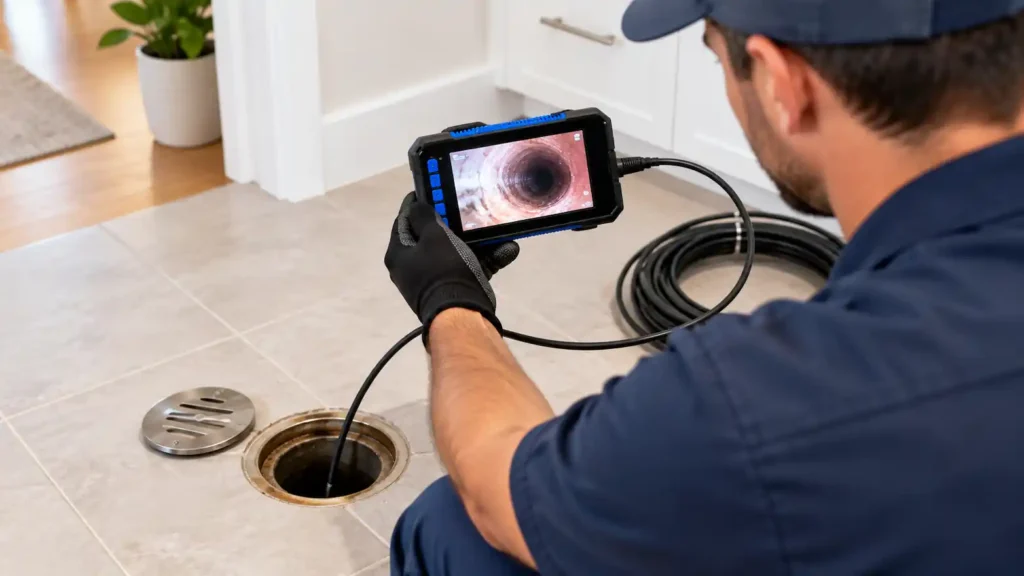
If neither of the surface methods will confirm the cleanout location then the solution is to remove the toilet and insert a camera through the floor connection. That one operation achieves two things: the camera will map the path of the sewer line from inside the building, will locate the cleanouts and the joint positions along the run and will document the condition of the interior wall at every point. It gives you a direct visual answer to where are sewer lines located rather than an answer derived from inference via the surface.
What Camera Inspection Adds to the Answer of Where Are Sewer Lines Located
Camera inspection turns ‘where are sewer lines located’ from a simple question of location into a full service picture of the actual pipe. The camera will map the line path as it travels through the pipe and will simultaneously record the pipe material at every section, the interior wall condition across the full surface, the joint integrity at every joint, the location and density of any restriction and any structural condition which would have an impact on the cleaning.
For Austin properties where the sewer line has never been professionally inspected the inspection report itself will often be the thing that changes the service recommendation. A main line in an older Austin area might be found to have a consistent layer of grease build up over a 60 foot run and a displaced joint section right up at the property line which explains both the rate of accumulation and the fact that it will invariably come back after each clearing.
The post clean camera pass confirms what’s been removed and produces a documented condition record for the line. Our main line hydro jetting service includes camera inspection as a standard part of the diagnostic sequence before any high-pressure cleaning begins, because the cleaning configuration that fits the specific pipe is determined by what the camera shows rather than by the symptom pattern described from the fixture level.
Where Are Sewer Lines Located by Austin Construction Era
Where are sewer lines located on a particular Austin property is dictated by when the property was built and what the infrastructure standards were at that time. The era in which it was built also dictates the pipe material the sewer line is made from which in turn will determine what will build up in it, what the structural risk is prior to high pressure cleaning and what the actual service outcome will be.
Properties built prior to the 1960s in the more established parts of Austin (Hyde Park, Travis Heights, East Austin, etc.) will have clay tile or cast iron sewer lines installed at various depths and in various configurations according to the standards of the day. Those lines have accumulated decades of mineral scale, joint movement due to the seasonal expansion and contraction of the central Texas clay soils and the attendant structural wear that a modern PVC system installed in the mid 1980s onwards has not had the benefit of.
Properties built between the 1960s and the early 1980s will typically have cast iron at the main line level with the earlier generation of PVC at the branch connections and in the early repairs. The transition zones between those materials can sometimes develop a degree of joint vulnerability over the years at the points where the materials change.
Austin Main Line Hydro Jetting: When Knowing Where the Line Is Leads to Service
Where are sewer lines located is the first step in the diagnostic process which ultimately leads to a service recommendation based on the actual condition of the pipe. The process starts with locating the cleanout, tracing the line through the yard, carrying out a camera inspection and then reviewing the documented results prior to approving any scope of work. That is the process which leads to an accurate service recommendation rather than a generic one based simply on the description of the symptoms.
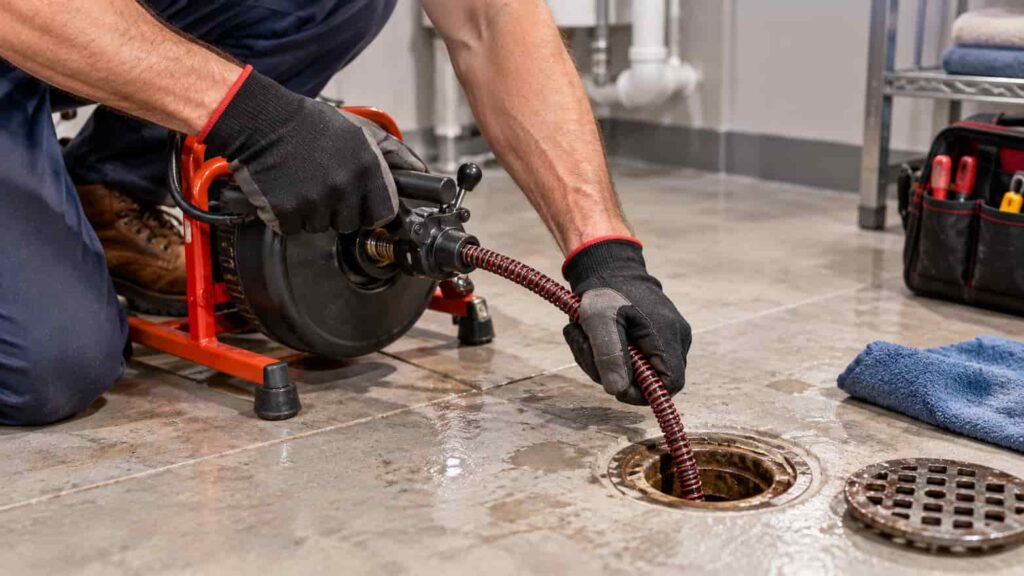
Where grease build up, mineral scale or root intrusion is confirmed inside the main line then high pressure jetting is used to clear the restriction from the wall and restore the full interior diameter of the pipe. Where structural damage is confirmed then a targeted structural repair or a section replacement is the correct scope and in that instance you do need to know where are sewer lines located and what the camera has shown you.
Making the Right Main Line Decision for Your Austin Property
Every Austin property has a sewer line with a defined location, a defined material and a defined internal condition which is a direct reflection of the age of the infrastructure, the local water chemistry, the surrounding landscape and the maintenance history of the property. Where are sewer lines located is the first tangible step in understanding that condition and making any main line service decision from a position of real knowledge.
Find the cleanout, establish the line path and do a camera inspection prior to approving any scope of work and every service recommendation is made in the context of the actual pipe condition. That context is what enables you to assess a main line service recommendation properly, ask the right questions prior to work commencing and have a real understanding of what a realistic outcome would be in the light of the actual infrastructure that you have.
Contact EZ Hydro Jetting Austin to get a professional evaluation of your sewer line condition and a service recommendation built on what the camera confirms inside your specific line before committing to any service.