Is drain cleaner bad for pipes is a question with a conditional answer that most product labels do not address directly. The honest version depends on the pipe material, the structural condition of the line at the time of use, the frequency of application, and what the chemical is being used to treat. For a first-time soft hair clog in a newer bathroom drain with PVC pipe in good condition, a single application carries limited risk.
Chemical drain cleaners generate heat through a caustic or oxidizing reaction that dissolves soft organic material near the drain opening. That reaction is not selective. It does not recognize the difference between the clog and the pipe surface surrounding it, and in materials that have already lost wall integrity from decades of mineral scale accumulation and internal oxidation, the additional chemical exposure accelerates deterioration that was already in progress before the first bottle was opened.
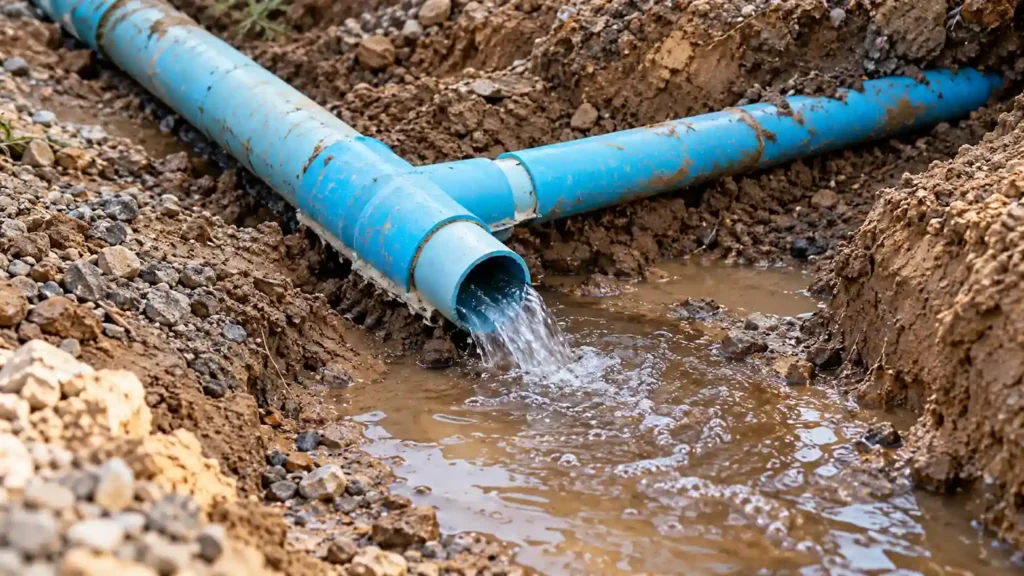
At EZ Hydro Jetting Austin, camera inspections in older Austin properties routinely document the evidence of long-term chemical drain cleaner use: softened PVC fittings at connection points, accelerated internal corrosion in cast iron sections near the primary treatment site, and a pattern of pipe wall erosion at locations where repeated chemical exposure has stripped material over years of repeated use.
Knowing is drain cleaner bad for pipes before the next application is what keeps a manageable drain problem from becoming a structural repair.
What Chemical Drain Cleaners Actually Reach Inside the Pipe
A liquid drain cleaner poured into a slow sink travels through whatever standing water is in the drain, contacts the first organic material it encounters, and begins its reaction there. For a clog that sits close to the drain opening, that contact point is near the fixture, the reaction dissolves the soft center of the accessible material, and flow temporarily improves.
That contact limitation is the fundamental reason is drain cleaner bad for pipes becomes a relevant question on recurring clogs. The chemical produces a reaction at the surface of the accessible soft material. The hardened layer bonded to the pipe wall surrounding that soft material is not dissolved, not removed, and not affected by the treatment in any meaningful structural sense. The drain clears temporarily.
Mineral scale, which builds on Austin drain line interiors from the high dissolved mineral content of Central Texas water, presents an additional limitation. Calcium and magnesium deposits that have crystallized against the pipe wall are not dissolved by lye-based or acid-based household drain cleaners at the concentrations available in consumer products.
Is Drain Cleaner Bad for Pipes: Risk by Pipe Type
| Pipe Material | Risk Level | Primary Concern |
| PVC, good condition, occasional use | Low | Minimal risk with infrequent single-drain use |
| PVC, repeated use at same location | Moderate | Heat from reaction can soften fittings over time |
| PVC, degraded or older | Moderate to High | Existing brittleness amplified by chemical exposure |
| Cast iron, good condition | Moderate | Caustic contact accelerates internal oxidation |
| Cast iron, deteriorated | High | Chemical exposure worsens existing wall loss |
| Clay tile | High | Brittle joints and porous surface vulnerable to chemical degradation |
| Galvanized steel | High | Existing corrosion accelerated by acid-based formulas |
| ABS plastic | Low to Moderate | More heat-resistant than PVC but not immune to repeated exposure |
For most Austin homes built before 1985, the answer to is drain cleaner bad for pipes moves toward the moderate to high risk range regardless of which drain is involved, because the pipe infrastructure in those properties carries decades of wear that causes chemical exposure compounds rather than addressing them.
How Hard Water in Austin Changes the Answer to Is Drain Cleaner Bad for Pipes
The mineral chemistry of Central Texas water creates a condition inside Austin drain lines that changes what happens when a chemical cleaner contacts the pipe interior. Calcium and magnesium dissolved in the local water supply deposit on the pipe wall over time, building a mineral scale layer that narrows the interior diameter and roughens the surface in a way that traps organic material from normal daily use.
A lye-based cleaner poured into a scale-coated cast iron drain reacts with the organic material embedded in the scale and generates heat at the interface between the organic accumulation, the scale surface, and the pipe wall beneath it. In materials like cast iron and clay tile, where the scale layer and the pipe wall have different thermal expansion rates, the repeated localized heating and cooling from multiple chemical treatments creates mechanical stress at that interface.
Is drain cleaner bad for pipes in Austin specifically has a more affirmative answer than in regions with softer water because the scale layer creates a chemical reaction environment that is more damaging to older pipe materials than a clean pipe wall would present. That interaction is specific to the local water chemistry, and it explains why Austin properties with older infrastructure and a chemical treatment history tend to show more advanced wall condition changes on camera than the drain symptom pattern from the fixture level would suggest.
What Chemical Treatment Leaves Behind and Why It Matters
Chemical drain cleaner use produces a short-term improvement in flow that creates a misleading impression of the drain condition. The soft organic material near the drain opening dissolves, the drain clears, and the homeowner concludes the treatment worked. What it leaves behind is the hardened wall-layer accumulation that was present before the treatment, now compressed slightly at the surface but otherwise unchanged in volume, density, and position against the pipe wall.
That remaining layer is what shortens the interval between the current treatment and the next needed application. Each cycle of chemical treatment removes a portion of the accessible soft material without reaching the bonded layer beneath it, and each new accumulation cycle adds to a base that is slightly thicker than the one before the previous treatment.
Is drain cleaner bad for pipes in the context of that cycle is a question about cumulative pipe exposure rather than any single application. One use on a fresh, isolated clog is a different event than eighteen applications to the same kitchen drain over three years. Camera inspection after repeated chemical treatment on the same line is what documents the accumulated effect on the pipe interior and determines whether the pipe supports the professional cleaning that should replace the chemical cycle.
Professional Assessment After Chemical Drain Cleaner Use: What the Camera Finds
Camera inspection in an Austin home with a history of repeated chemical drain cleaner use on recurring clogs frequently shows conditions that the fixture-level symptom pattern did not suggest. Softened PVC at fitting locations near the primary treatment site, accelerated internal oxidation in cast iron sections where the chemical contacted the metal repeatedly, and a pattern of wall erosion at the locations where the reaction generated the most heat are among the findings that change the service recommendation before any cleaning begins.
Those conditions matter for what happens next. A PVC fitting showing softening at a connection point may not support the full compression of a jetting nozzle without risk of joint displacement. A cast iron section with advanced wall oxidation near a previously treated clog site may need reduced pressure settings or a structural assessment before high-pressure water enters that section of the line.
Is drain cleaner bad for pipes becomes fully answerable in those cases because the camera shows exactly what the chemical treatment history produced inside the specific pipe in front of the technician.
The camera inspection is also what confirms whether the drain problem that prompted the chemical use is actually a wall-layer issue or a structural condition. A line with a pipe belly at a low point will re-accumulate material at that location regardless of how thoroughly it is cleaned, because the geometry of the pipe creates the collection point. Chemical treatment applied to that situation is not bad for the pipe only because of the chemical itself. It is bad because it is the wrong response to the actual cause of the restriction.
When Professional Service Replaces Chemical Treatment for Austin Drain Problems
The transition from chemical drain cleaner to professional service is indicated by the pattern of diminishing returns, not by any single failed treatment. A drain that cleared with one chemical application and stayed clear for six months describes a situation where the treatment addressed a soft, localized clog and the drain returned to normal function.
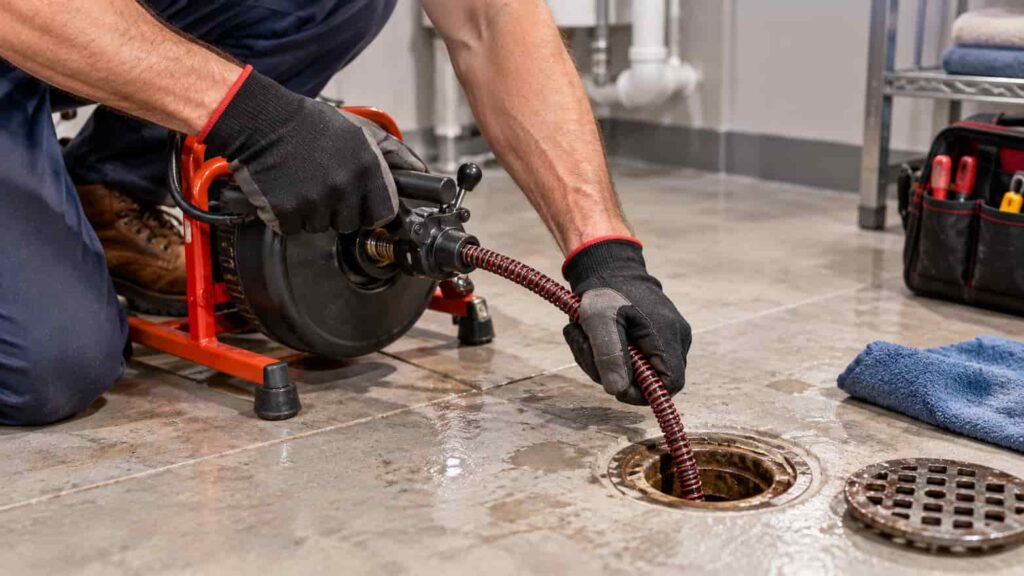
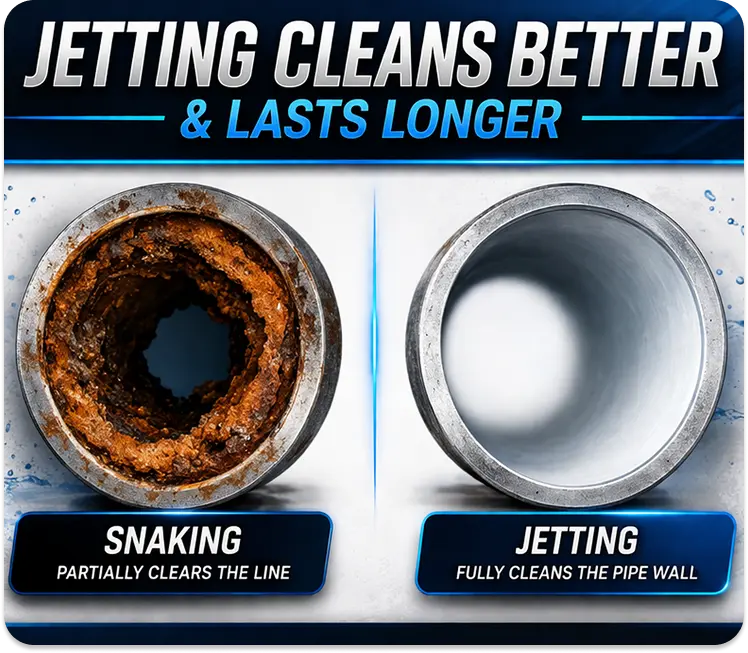
High-pressure jetting is the service that addresses the wall-layer cause of that cycle. It delivers pressurized water through a specialized nozzle that travels through the full interior of the pipe, strips the accumulation layer from the wall surface, and carries the cleared material out of the system. The result is a pipe with recovered interior diameter rather than a temporary soft-center clearing that grows back from the bonded layer that was never removed.
Our residential hydro jetting service addresses the wall-layer accumulation behind recurring drain problems with high-pressure cleaning calibrated to the pipe condition and accumulation type confirmed by camera inspection before the service begins. That sequence, inspection before cleaning, is what determines whether the pipe supports the service and what nozzle configuration and pressure settings fit the specific composition of what the camera found inside the line.
Is Drain Cleaner Bad for Pipes: Choosing the Right Approach
| Situation | Chemical Cleaner | Professional Assessment | Why |
| First-time soft clog, newer PVC pipe | Acceptable as a first step | Not immediately necessary | Low risk, localized problem |
| Same clog returned within 2 months | Not appropriate | Camera inspection first | Wall-layer accumulation likely |
| Recurring clog, cast iron or clay tile | Avoid | Camera inspection before any service | Structural risk from chemical exposure |
| Clog in older home, unknown pipe material | Avoid | Camera inspection required | Material and condition determine safe approach |
| Multiple fixtures slow simultaneously | Avoid | Main line camera inspection | Chemical cleaners not effective on main line |
| Previous chemical use, recurring problem | Discontinue | Camera inspection, then hydro jetting | Need to assess pipe condition before cleaning |
This framework answers when is drain cleaner bad for pipes specifically enough to guide the decision before a service call is scheduled. The left column describes the situation. The middle and right columns describe what fits and why, without requiring a professional on-site to make the initial determination about which approach applies.
Making the Right Drain Decision for Your Austin Home
Is drain cleaner bad for pipes is ultimately a question about whether the treatment matches both the actual cause of the restriction and the actual structural condition of the pipe being treated. For soft, isolated, first-time clogs in newer pipe in good condition, a single chemical application is a reasonable first step with low risk.
For recurring clogs in older Austin drain lines that have been treated chemically multiple times without lasting improvement, the answer is yes in that specific situation, because the treatment is adding cumulative chemical stress to a pipe whose condition it is not equipped to assess and a wall-layer accumulation it is not equipped to remove.
Contact EZ Hydro Jetting Austin to talk with our team about your drain situation and schedule the service that matches the actual condition of your line before reaching for another chemical treatment.