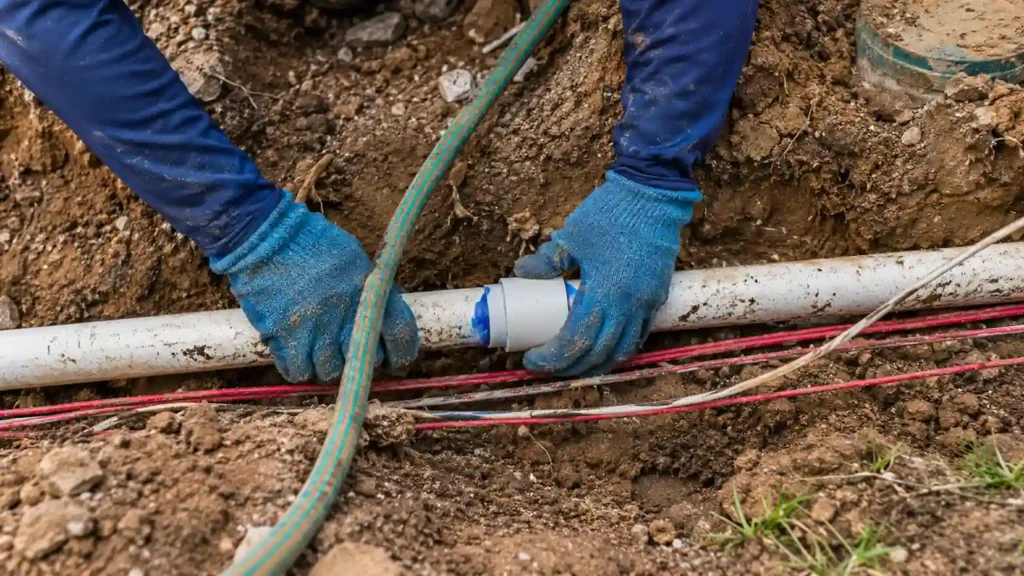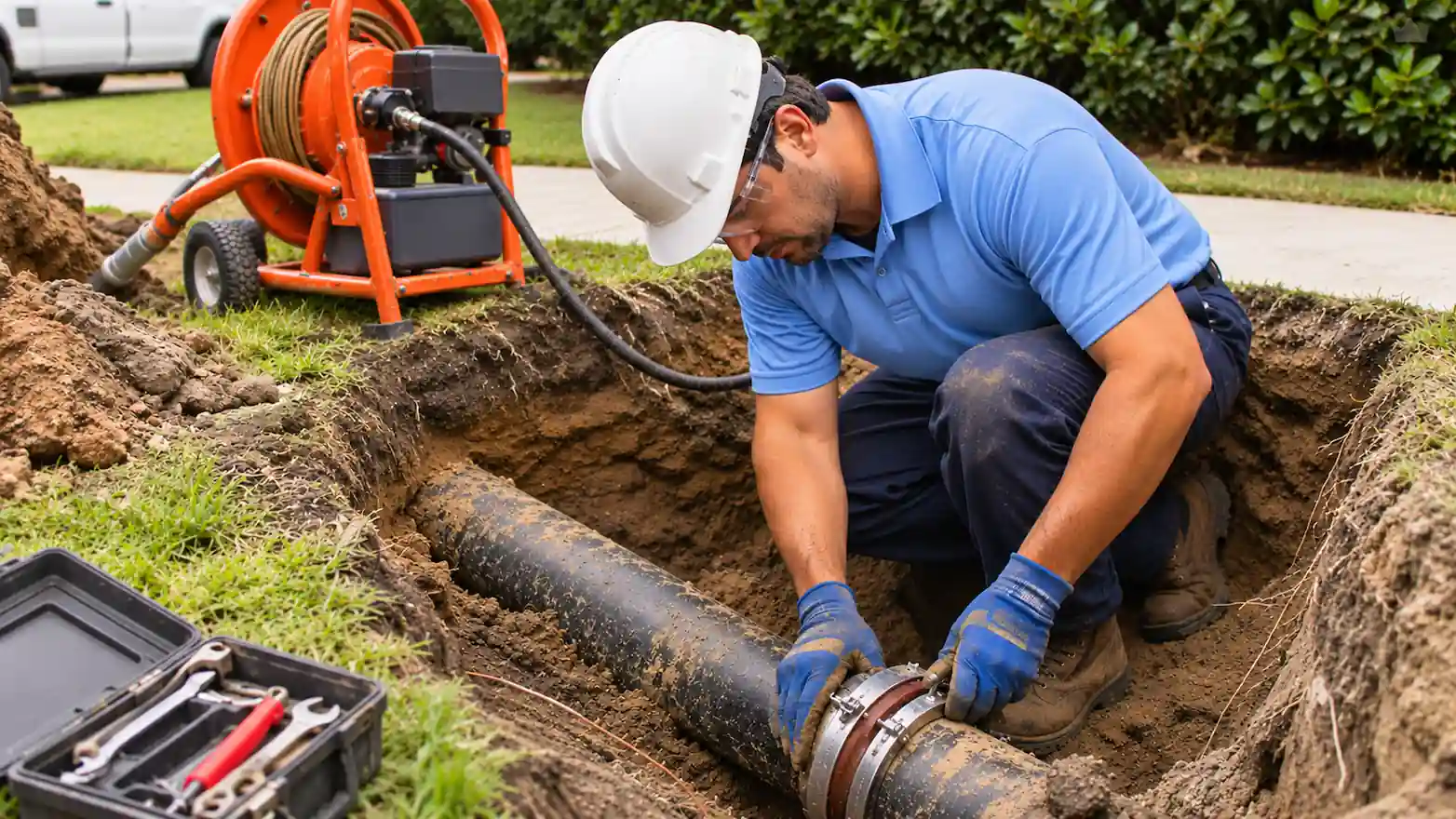
Knowing how to locate main sewer line access points saves time during a backup and prevents expensive mistakes before a digging project. In most homes, the line people mean is the privately owned lateral sewer line that carries waste from the house to the public sewer main, and homeowners often find it first by looking for clues inside the house.
This guide begins by examining terminology because a lot of confusion can arise with the term main. From there, it explains how to recognize the signs both within and outside of the house, records to look at, devices to validate your route, and errors which will cause damage to your lines.
At EZ Hydro Jetting Austin, we frequently get calls to locate the main line first before cleaning or inspecting it. This is important because a properly located pipe can be inspected, cleaned, and serviced much more easily and accurately than otherwise.
What “Main Sewer Line” Actually Means
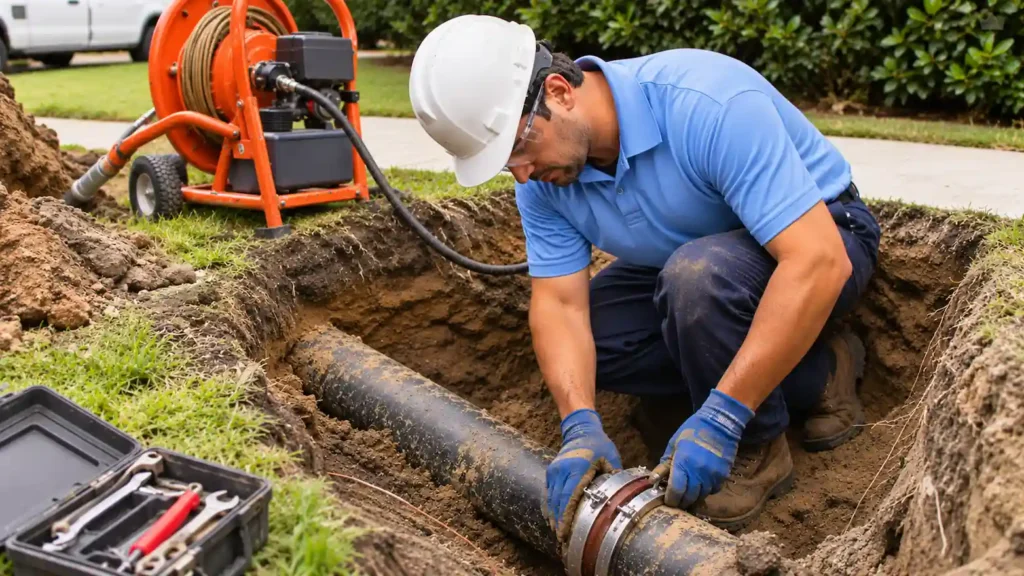
The term has three distinct meanings. Plumbers refer to the main sewer line of the house, which is the pipe through which all branch lines converge before going outside. Homeowners usually mean the buried sewer line that runs up to the street. The city, on the other hand, means the public sewer main on the street.
| Term | Where it is | Usually maintained by |
| House main drain | Inside the building where branch drains meet | Property owner |
| Building sewer or lateral | Outside wall to the public main | Property owner, with local variations |
| Public sewer main | Street or easement | City or utility |
| Cleanout | Capped access on the building drain or sewer | Not a pipe but an access point |
Model plumbing codes mark the boundary between the building drain and the building sewer at roughly two to two and a half feet outside the exterior wall, depending on the code, and your city’s adopted code decides which applies. For practical purposes, how to locate main sewer line access depends on which of these three pipes you actually mean.
The difference is critical when it comes to repair and in determining who needs to get called. If the wastewater keeps rising without any fixture being on, then this means that the problem could be with the public line and the city authorities need to be notified.
Inside the House: How to Locate Main Sewer Line From Clues
The house main drain is the easiest part to find, and it usually points to where the pipe leaves the building. When people ask how to locate main sewer line from inside the home, the answer starts at the lowest, most central drains, since every branch eventually joins a larger line near the foundation.
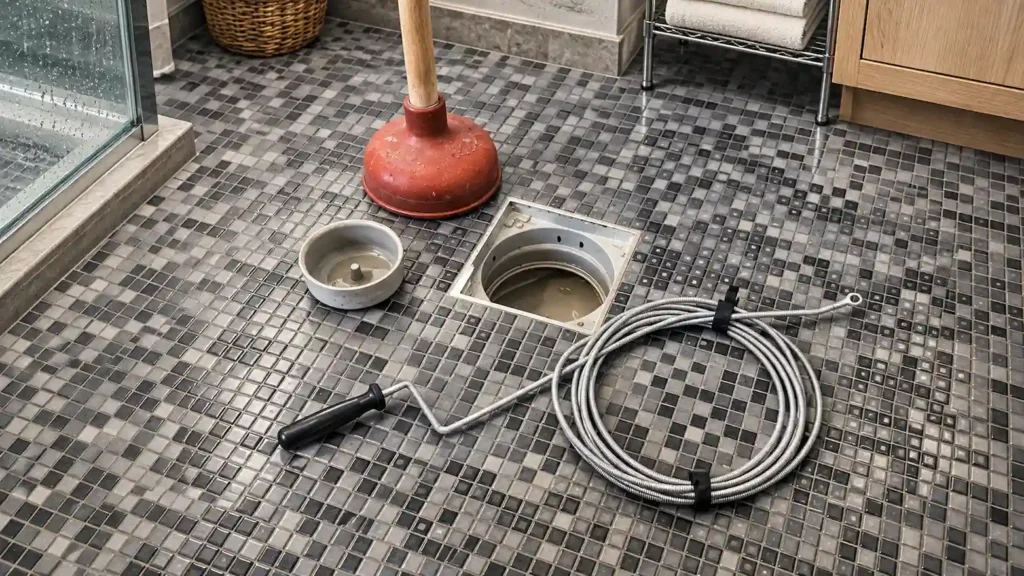
- A cleanout fitting in a garage, utility room, closet, or crawl space.
- The large vent stack through the roof, which often sits above the main drain stack.
- The lowest bathroom, where larger drain pipes often exit through the slab or floor.
- Exposed drain pipes in a crawl space on a pier and beam home, usually three to four inches wide.
The location of the primary exits depends upon the type of foundation. In slab homes, the pipe is laid beneath the concrete foundation and comes out above the wall. Interior clues lead to the wall and not to the direction of the pipe. In pier and beam homes, it is common to see the pipe in the crawl space.
Check out garages and utility rooms. This is due to the fact that plumbers typically tend to place plumbing in proximity to water heaters and bathrooms.
Outside Clues: Cleanouts, Slope, and Surface Signs
Outside, a capped pipe stub at ground level is the best answer to how to locate main sewer line routes without digging. These cleanouts are commonly found near the foundation, along the path to the street, or near the property line.
If there are two cleanouts on the same line, then you have your bearings. Pipes usually run downhill to the street or alley. Therefore, a straight line between the cleanouts, taking into account any obstacles, will be a good approximation of the path. Consider this approximation as an initial assumption, as buried pipes tend to curve.
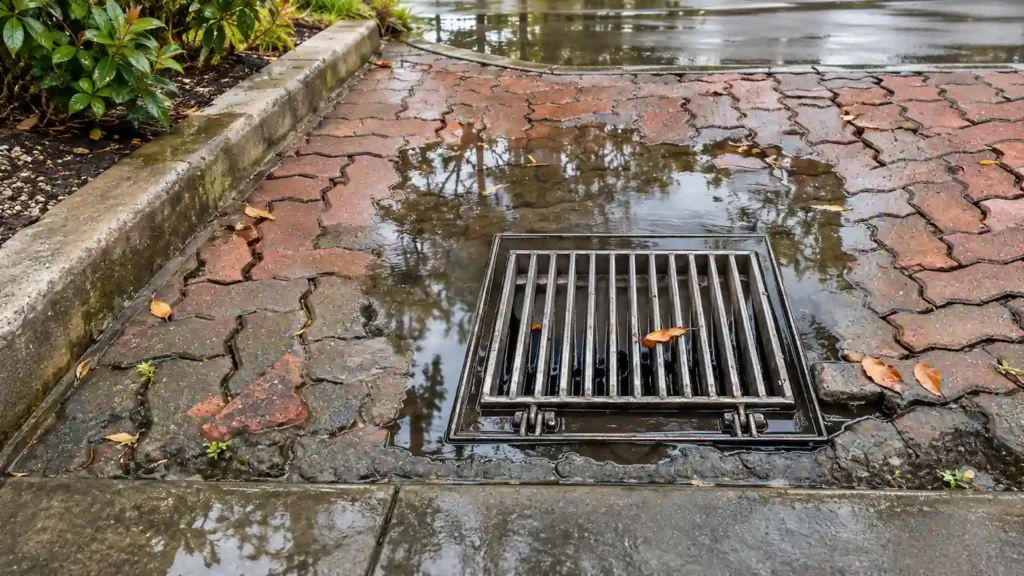
Surface markers will guide your search. A greener grass strip, a wet depression, or a slight settling area above the assumed path is an indication of a leak or disturbed area. Do not rely on these markers as proof, as irrigation leaks have the same symptoms.
Buildings and landscaping can bury or move the cleanout. If you do not see a cap, sweep some soil off near the foundation and along the probable path before you assume it does not exist.
Using Fixtures and Sound to Confirm the Pipe
Fixtures can confirm what clues suggest. A simple method for how to locate main sewer line paths is to flush or run water at the lowest fixture while a second person listens at a cleanout or along a crawl space for flow.
Should there be water in a cleanout right after flushing, then the cleanout belongs to the line feeding that fixture. Should the flushing from a toilet appear only in one cleanout and not the other, you are probably looking at two separate branches, not one common line.
Be very cautious opening cleanouts; if the line is stopped up, then the cap could pop open with pressurized sewage flowing from it, so always do so cautiously and never get close to your face.
Records and Maps: How to Locate Main Sewer Line Without Digging
Forms are time-saving. These could be in the original builders’ plans, in the plumbing permit, in a previous plumber’s report, or in an inspection of the property including the sewer scope, which would reveal all the details required.
Recorded subdivision plats are another source. The Travis County Clerk real property records include plats, which show lot lines and may show utility easements, helping you understand where public lines run relative to your lot. A plat is a layout drawing, not a pipe map, so use it for context and not for exact positions.
Neighbors and HOAs can also help. Homes built by the same builder in the same phase often share layouts, so a neighbor’s cleanout location can answer how to locate main sewer line questions for your lot quickly.
Municipal utility plans generally indicate the main lines, manholes, and at times the connections from the main line to buildings, but not the pipe line that is present on your property. You should start with the municipal utility plan and then move backwards from there towards your house.
Tools That Confirm the Exact Path
When clues, records, and neighbors do not settle the question of how to locate main sewer line paths with confidence, a camera with a locator is the standard answer. A small transmitter in the camera head lets a technician trace the pipe from above, mark its path, and read its depth.
| Method | Good for | Limit |
| Cleanout sighting | Finding access and direction | Buried or missing cleanouts |
| Records and plats | Context and easements | Not exact pipe positions |
| Probe or detector | Shallow caps and cast iron | Risks damaging old pipe, cannot read depth |
| Camera with locator | Exact path, depth, and condition | Needs professional equipment |
The camera also tells you what the pipe is made of and what condition it is in, which matters before any digging, cleaning, or landscaping project. A located pipe is useful. A located and inspected pipe is a plan.
When to Bring in a Professional
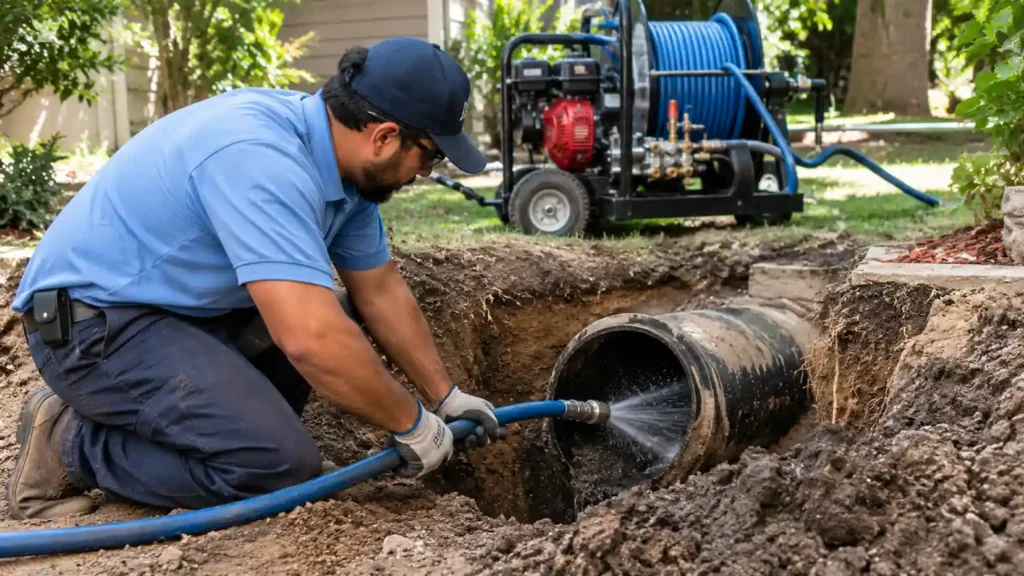
At EZ Hydro Jetting Austin, our residential hydro jetting service begins with locating the access point and confirming the line, so cleaning and camera work are aimed at the right pipe. That is especially useful in older neighborhoods where cleanouts are buried or were never installed.
Call a professional when you cannot find a cleanout, when the path crosses concrete, when a project involves deep digging, or when a backup is already happening. For those cases, how to locate main sewer line routes safely is a job for equipment, not guesswork.
Asking about the locating technique, whether you will get any footage, and if marking the route on the ground will be included in the visit is necessary to make sure there are no surprises later.
A good locating provider will locate your lines, explain their findings, provide you with footage and an observation report. If the lines require cleaning, you can do that separately.
Putting It Together: A Simple Plan
Finding out how to trace the route of the main sewer lines can be summarized in the following way. You need to determine what the pipe in question is, find the location of the cleanouts and lowest drains, research records, talk to your neighbors, confirm everything using a pipe locator, and then call 811 before you dig.
Make notes of what you discover. Draw a diagram, marking the distance from the foundation to all cleanouts, and take pictures of every access point.
Get a quote and let EZ Hydro Jetting Austin locate the line, inspect it, and tell you plainly what it needs, before anyone breaks ground.