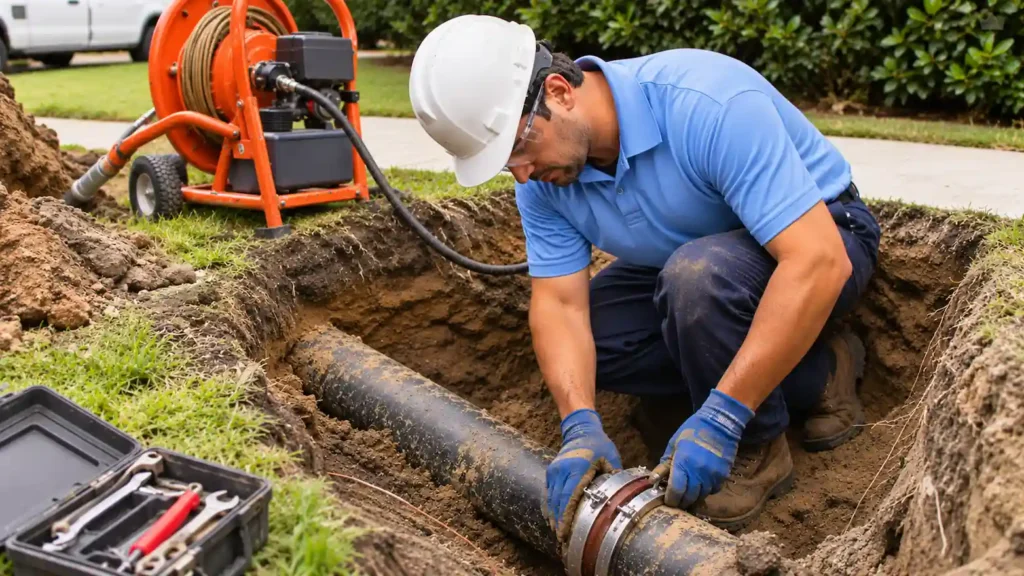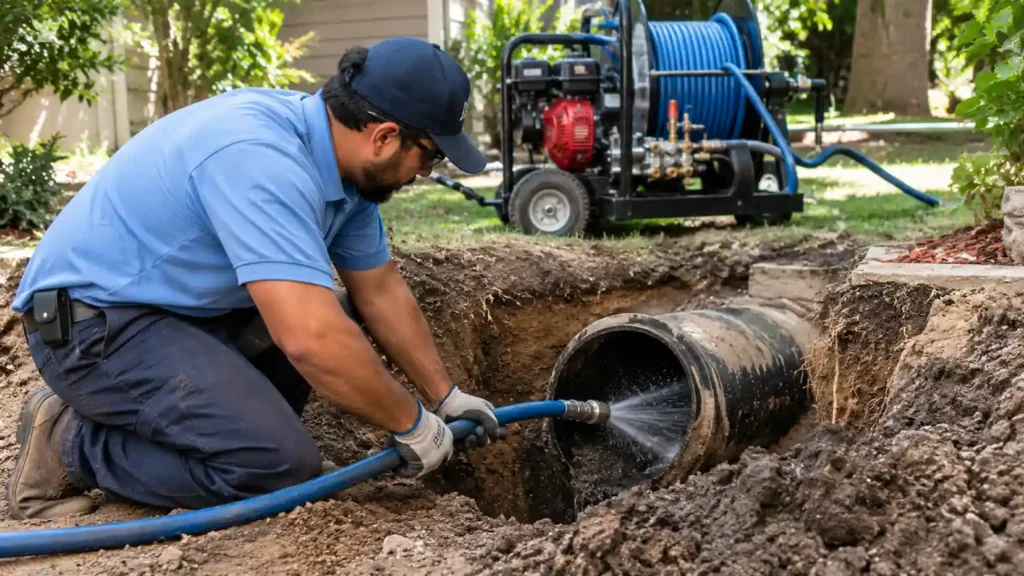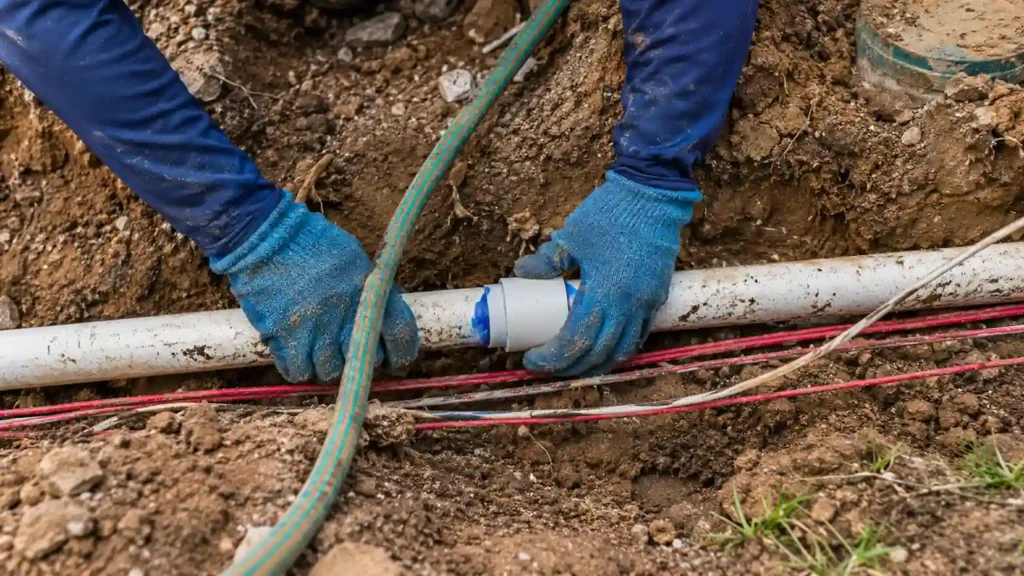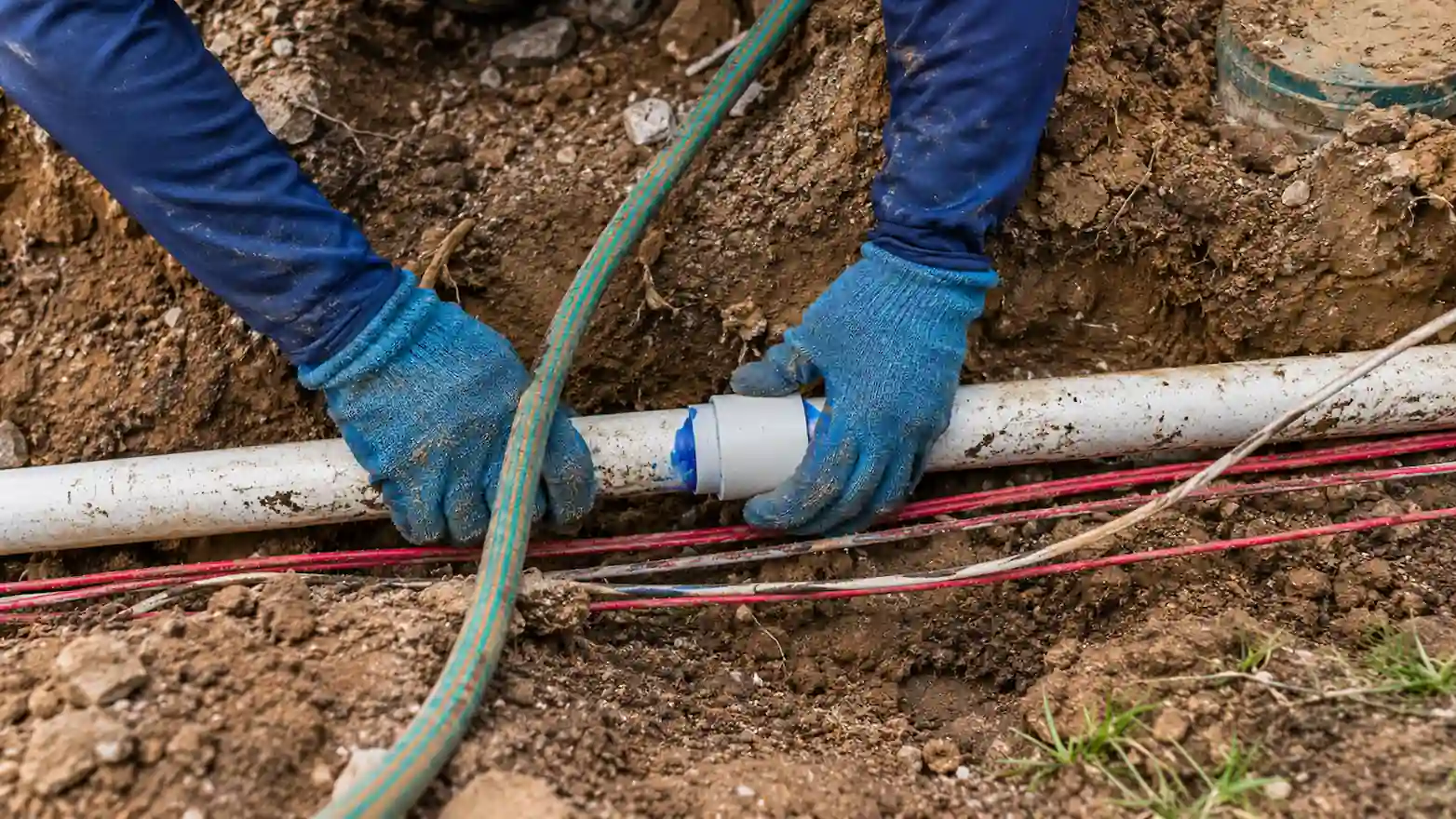
Knowing how to locate a sewer line in the yard differentiates a planned project from an emergency repair. A fence post, an irrigation trench, or a new patio can all strike a buried sewer pipe, and 811 will not mark that pipe for you, since private utilities go unmarked by member companies.
This guide will help you find out how to mark the sewer line in your Austin backyard, starting from cleanout inspections, grading signs, to probing, documents, and camera detection, telling you at which point each method becomes useless.
At EZ Hydro Jetting Austin, we locate and inspect the line in one go. In the process of the camera test, it becomes possible to find out where the pipe is located, what material it is made of, and whether it can withstand any digging and jetting in the vicinity of the pipe.
What a Residential Sewer Line Is and How It Runs Through a Yard
A residential sewer line is an underground pipe that carries all sewage from a house to the main sewer of the city. It has a diameter of four to six inches and runs from the basement to the road or alley. Due to gravity, it cannot deviate from the slope.
In the case when there is a slab foundation, the pipe starts at the bottom of the slab and runs below it. In pier-and-beam foundation houses, usually found in old parts of Austin, the first part of the pipe is found under the floor in the crawlspace. Either way, the yard portion is the part that matters for digging, and knowing how to locate sewer line in yard begins with that exit point.
Burial depth differs from lot to lot depending on the slope of the lot and the regulations that were in effect when the house was constructed. It is for this reason that the depth must be measured rather than estimated.
Start With the Cleanouts Inside and Outside the House
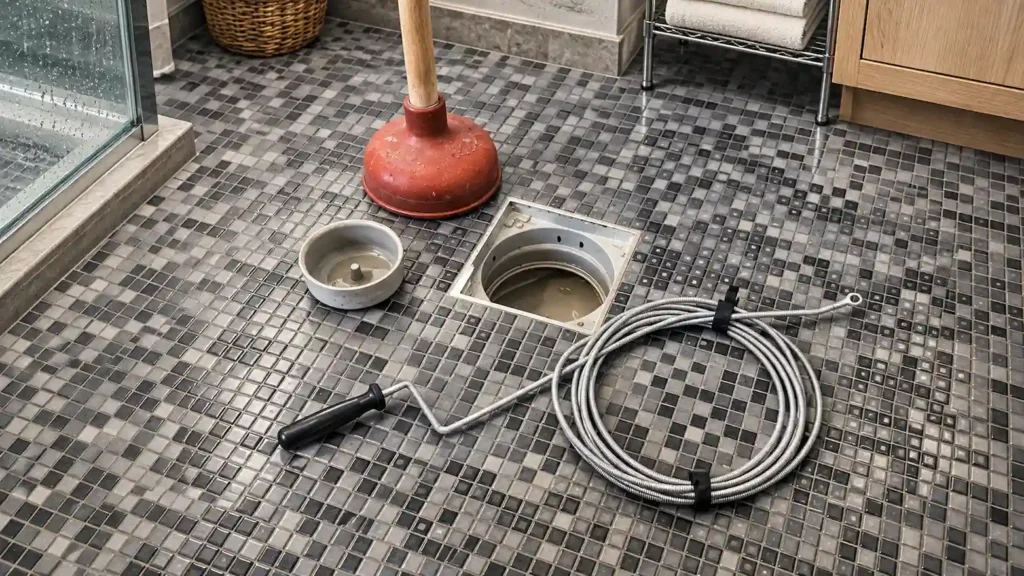
The cleanout is a pipe fitting that has a cap and allows direct access to the sewer line, and this is the quickest way to determine how to find the sewer line in your yard. The location will be either near the bathroom closest to the ground level, utility room, or the bottom of a stack.
When there are two cleanouts on one sewer line, the straight line can serve as a reference. Stand at the interior fitting and look in the direction of the exterior fitting, and there is a good chance that the sewer line will go in the almost straight line between those fittings. In some old Austin yards, the exterior cap might be buried under mulch.
Reading the Yard: How to Locate Sewer Line in Yard From Surface Clues
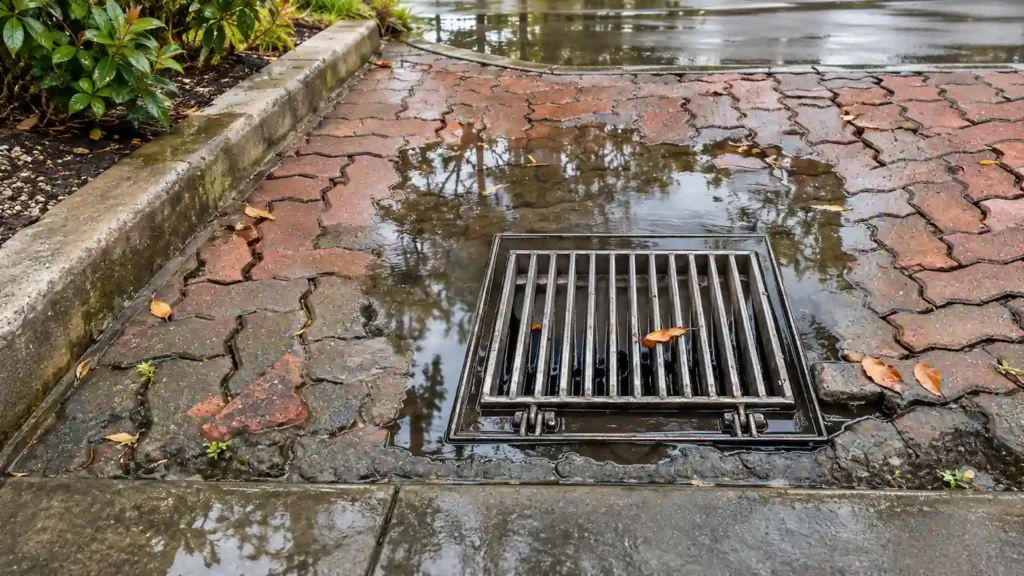
Surface indicators refer to the visual indications, such as slope and grass quality, that will point out the location of the buried pipe. The sewer line has a constant downward slope, meaning that the pipe will normally follow the slope from the building’s foundation down to the street. Green or wet strips of grass may indicate a leaky joint.
Surface reading is the cheapest part of how to locate sewer line in yard, but it gives a direction, not a map. A damp strip can also come from a leaking irrigation line. Combined with the cleanout positions, though, these clues shrink the search from the whole yard to a much narrower corridor.
Take pictures and measure while doing this. Measure from the base to each cleanout and flag off each location where you did probing so that when a plumber or locator comes along, he won’t have to start all over again.
Probing, Records, and 811: Tracing the Line Without Damaging It
A thin metal probe rod when pressed carefully against the soil on the probable course will experience resistance when the tip of the rod encounters the pipe or cap. Take your time and apply hand pressure alone, because applying too much force might result in a break on an old clay or cast iron pipe. Metal detectors can detect the buried cast iron cleanout caps without disturbing the ground.
Other sources of information would be the building permit on the property that is available at the municipality, the builder’s plan, or a former plumber’s report. Ask neighbors in the same subdivision, because homes built together often share the same layout, which is one more shortcut in how to locate sewer line in yard.
Before any digging, call 811 at least two days ahead, since the Texas damage prevention rules apply to excavation even on your own property. Member utilities will mark gas, electric, and other public lines, which protects you from the most dangerous hits. They will not mark your sewer lateral, so the probing and records above still do the work for it.
Camera Locating: How to Locate Sewer Line in Yard When Nothing Else Works
Camera locating pairs an HD inspection camera with a small transmitter in the camera head. A technician above ground uses a receiver to follow the signal, mark the path, and read the depth at each point. When the question is how to locate sewer line in yard without opening the ground, this is among the most precise options.
| Method | What it finds | Main limit |
| Cleanout sighting | Entry points and direction | Cleanouts may be buried |
| Surface clues | General route | Not exact |
| Probe or metal detector | Buried caps and shallow pipe | Cannot read depth, risks old pipe |
| Records and plans | Route and material | May be missing or outdated |
| Camera with locator | Exact path, depth, and condition | Needs a professional crew |
What the Line Path Reveals About Pipe Condition
Finding the path is only half the job, because anyone learning how to locate sewer line in yard also needs to know what is buried there. The route and the era of the home point to the pipe material.
Older Austin homes prior to the 1960s would most likely use clay tiles or cast iron pipes, whereas newer houses built in the mid-1980s and after use PVC pipes. The older piping materials are more susceptible to having more scaling and joint movements that affect how safe the pipe is to be cleaned or excavated around.
In the pipe interior, the grease and mineral scale build-up of hard water in Central Texas, as well as roots from any mature live oak trees and cedar elm in the area along the line, can grow through weak joints. All of these can be observed on the video, and this data can be used to make plans for cleaning or other maintenance work.
Requesting the video and a written document regarding the materials, depth, and defect condition of the pipe can be helpful for future house transactions and renovations. At EZ Hydro Jetting Austin, our main line hydro jetting service starts with this kind of camera pass, so the path, depth, and pipe condition are documented before any cleaning begins. If the footage shows damage, we walk through the repair options before recommending cleaning.
DIY Tracing Versus Professional Help With How to Locate Sewer Line in Yard
DIY tracing works when two cleanouts line up, the yard is open, and the goal is a rough route for a small project. Professional locating is the better choice when cleanouts are missing, the pipe runs under concrete or landscaping, or the work involves deep digging, a pool, an addition, or any line that has already backed up.
| Option | Pros | Cons |
| DIY tracing | Free, immediate, good for rough routes | Cannot read depth, risk of cracking old pipe, may miss the real path |
| Professional locating | Exact path and depth, condition documented, one visit | Costs more than DIY, needs scheduling |
Austin Yards and the Complications They Hide
Hand tracing is made more difficult by problems arising from the Austin area. The soil is clay, and it expands and contracts in the various seasons, moving old piping and connections. Decades of mulching, soil, and sod have buried cleanouts deeply underground, and there may have been changes done to sections of the piping with no record of it.
That uncertainty is why older neighborhoods often need a camera and locator rather than a probe. Newer subdivisions follow more predictable layouts, but anyone planning a pool or addition and wondering how to locate sewer line in yard should still confirm the depth.
The laterals from the house to the city main are also owned by the homeowner, according to Austin City Code, which makes it important for the location of that pipe to be known.
Making the Right Move Before You Dig in Your Austin Yard
The sewer line has a path, and a few careful steps can reveal most of it. Start with both cleanouts, read the grade and the yard, check records, probe gently, and call 811 before any digging. When those steps leave doubt, or the project is large, how to locate sewer line in yard stops being a DIY question and becomes a locating job.
A professional location also leaves you with a documented route and pipe condition, which protects the project, the pipe, and your budget. Get a quote and let EZ Hydro Jetting Austin trace the line, inspect it, and explain the right next step before anyone breaks ground.