A plumber for sewer odor is the right call when a rotten egg smell keeps returning after you have run water down every drain. The smell is sewer gas, and its main component is hydrogen sulfide. The federal ATSDR describes the hydrogen sulfide health effects and notes that the nose can stop detecting the gas after a few minutes at high levels, so a fading smell does not mean the problem is gone.
Almost all sewer smells in an Austin household can be traced to one of four causes: a dry trap, a bad seal on the toilet, a clogged vent, or something building up inside the pipe that restricts flow. All these issues require a different approach, and being mistaken about the source means the smell stays in the home and the cause grows worse.
Here at EZ Hydro Jetting Austin, we begin by looking at the pipe. If the odor seems like it might originate from the sewer main, we check what is actually inside the pipe using a camera before we recommend doing any kind of cleaning or fixing, to ensure that the process is appropriate to the actual problem.
What Sewer Odor Actually Is and Where It Comes From
The odor emanating from the sewer system is the result of the emission of gas through an opening that should have been sealed. All drains have a water trap which serves as a barrier to gas emissions from the sewer system, while the vent system maintains the flow of air in order for the water traps to function.
The hydrogen sulfide is responsible for the characteristic smell, and being lighter than air, it sinks towards the ground where it can easily collect in utility areas, the garage, and the bathroom. Hence, the smell is noticeable in such low places. An odor that hangs around, gets stronger after flushing or appears in many rooms needs attention and not just air fresheners.
It is possible for methane and other components from decayed materials to exist in the sewer gases; hence, the smell should not be ignored.
Common Sources of Sewer Odor in Austin Homes
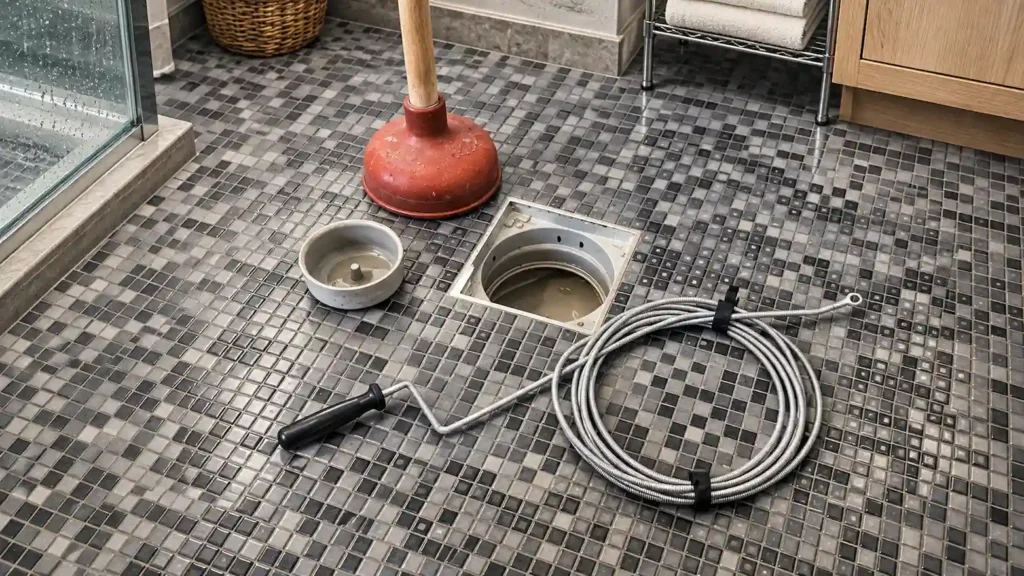
A dry trap is one of the most common and easiest sources to fix, and a plumber for sewer odor can rule it out in minutes. Michigan State University’s environmental health office explains how a dry drain trap lets sewer gas rise once the water seal evaporates. Austin’s long, hot summers speed that process in guest bathrooms, garage floor drains, and laundry rooms that sit unused.
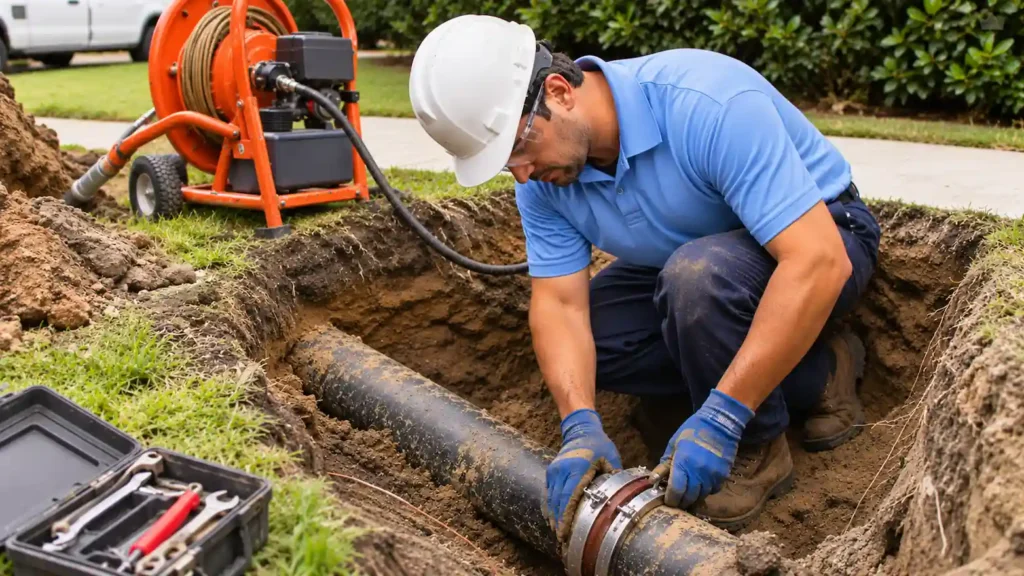
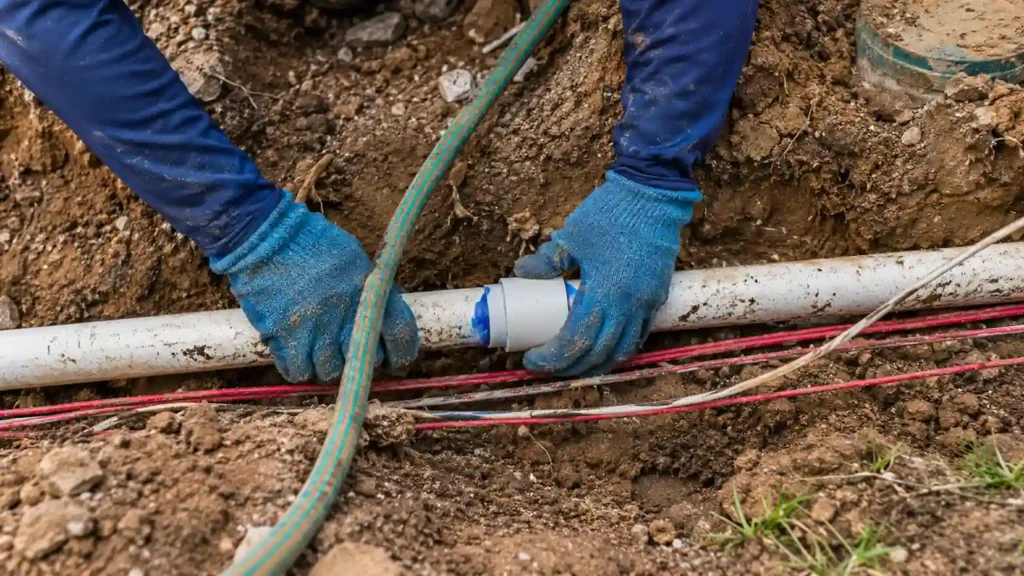
Other typical causes include a worn wax ring located at the base of a toilet, a vent that is clogged with debris or a bird’s nest, a cracked drain pipe that could be located within walls or beneath the slab, and a broken cleanout in the backyard. All of these provide a distinctive sign, whether it be odor localized to one toilet, odor with gurgling, or odor outside.
One source that is rarely considered by homeowners is the accumulation within the main sewer line itself, which is addressed in the following section.
How a Plumber for Sewer Odor Narrows Down the Source
A plumber for sewer odor works from simple checks to inspection tools, ruling out cheap fixes before recommending expensive ones. Some of the initial questions may include the location of the smell, the time of day when the smell is most intense, and the condition of other drains such as gurgling or sluggish drains.
| Where the smell appears | Likely source | First check |
| One rarely used drain | Dry trap | Refill with water and retest |
| Base of one toilet | Worn wax ring or loose flange | Inspect the seal |
| Whole house, worse after flushing | Main line restriction or vent issue | Camera inspection |
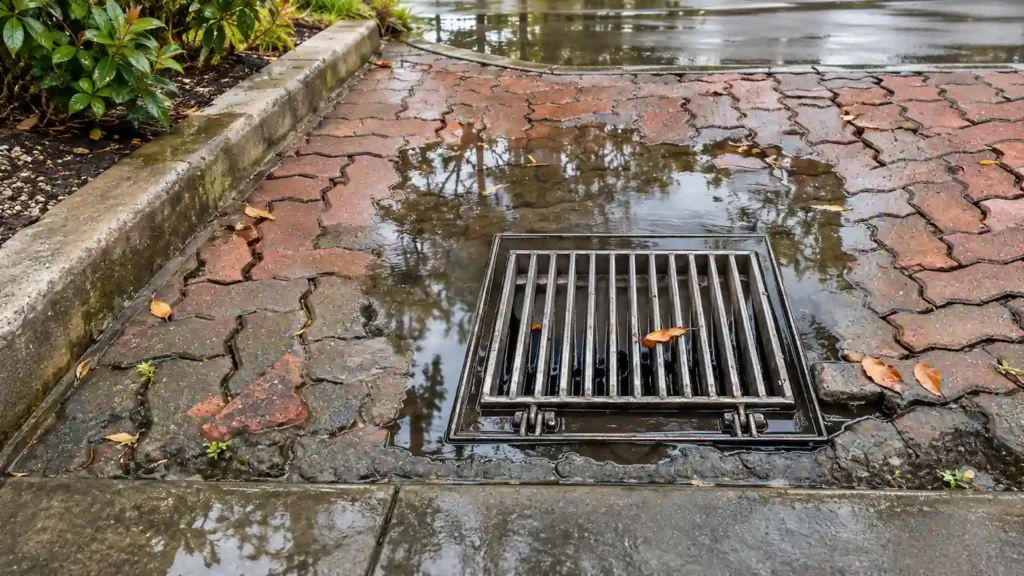
| Yard near the cleanout | Open or cracked cleanout | Inspect cap and fitting |
| Odor with gurgling drains | Vent blockage or main line buildup | Vent and line check |
The table is a starting point, not a verdict. A smell near one toilet can still trace back to a restriction downstream, which is why a camera running through the line settles the question when the simple checks do not.
DIY Checks Versus a Plumber for Sewer Odor
A home check is reasonable when the smell comes from one fixture and disappears after you refill the trap. These steps cost nothing and rule out the simplest causes.
Try these first at home:
- Run water in every unused sink, tub, and floor drain for a minute.
- Check that each toilet sits solid and the base stays dry.
- Clean sink overflow openings and drain stoppers.
Call a plumber for sewer odor when:
- The smell returns within days of refilling traps.
- More than one room smells, or the odor strengthens after flushing.
- Drains gurgle, run slowly, or back up.
- You smell it outdoors near the cleanout or along the sewer path.
- The home is older and has never had a main line camera inspection.
If a refilled trap holds the odor away for a month and then the smell comes back, the trap is probably losing water to a leak or a siphon, which also calls for a professional look.
How Main Line Buildup Produces Sewer Odor in Austin
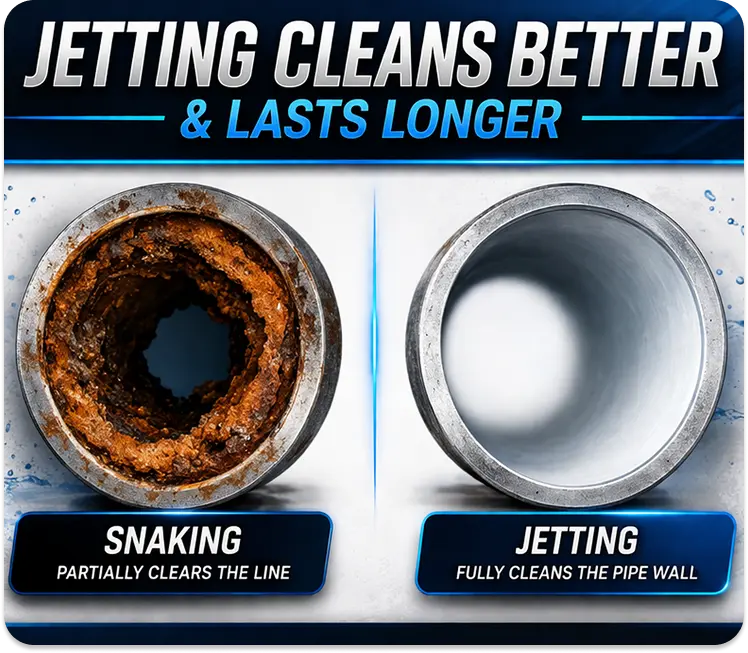
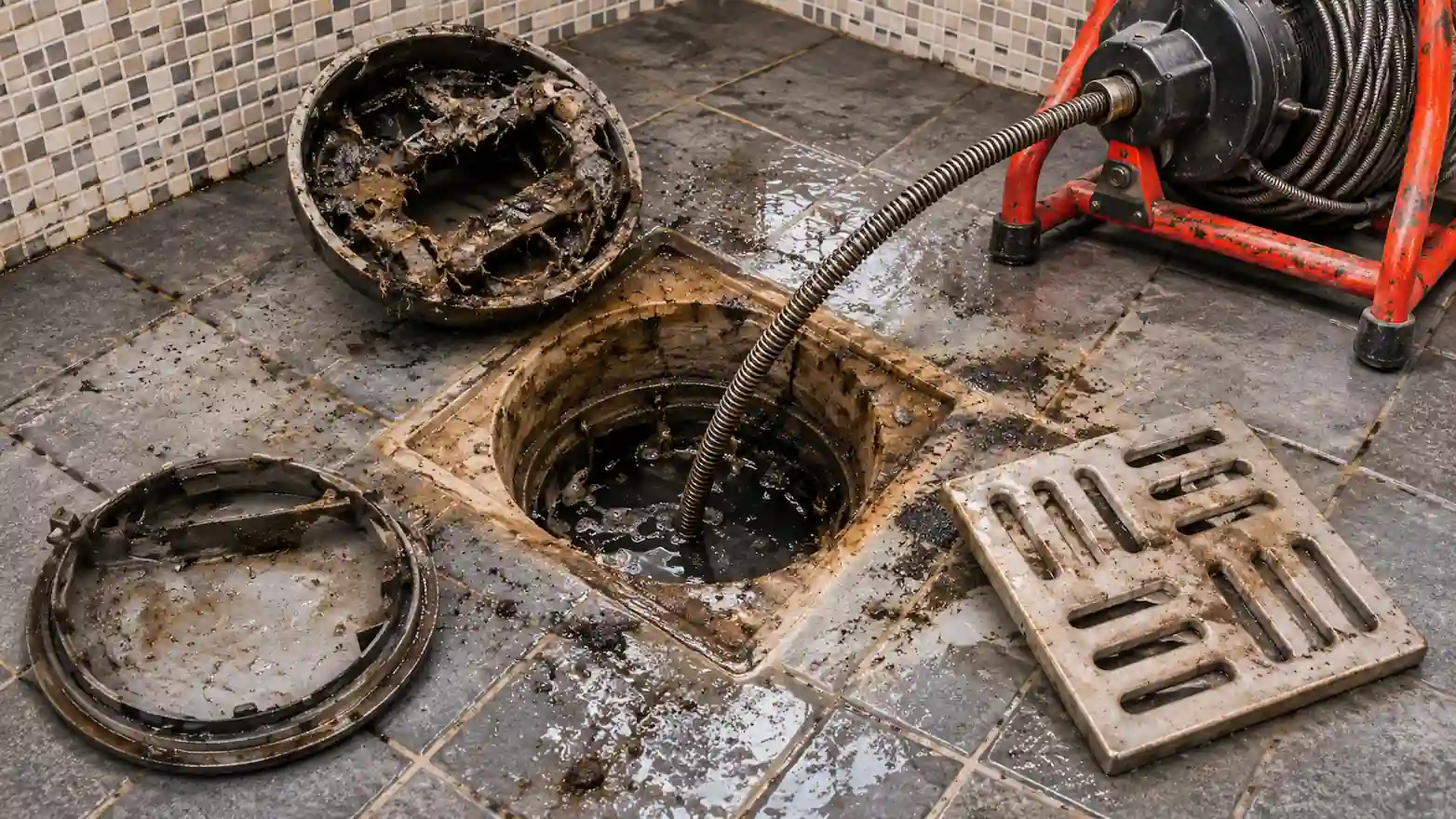
Odor formation by mainline buildup occurs due to the fact that grease, soap and mineral scaling allow decayed organic matter to stick onto the walls of the piping system. Due to the presence of high amounts of hardness in Central Texas water, calcium and magnesium scaling takes place on the walls of drainage pipes, allowing grease and organic residues to cling better. With time, this lining makes the pipe smaller and starts to emit an odor due to decay.
Infiltration by root growth constitutes a second source of gas. Well-established oak and cedar elm trees located close to the sewer lateral can grow into the joints through small cracks. The very cracks that facilitate root intrusion allow gases to escape.
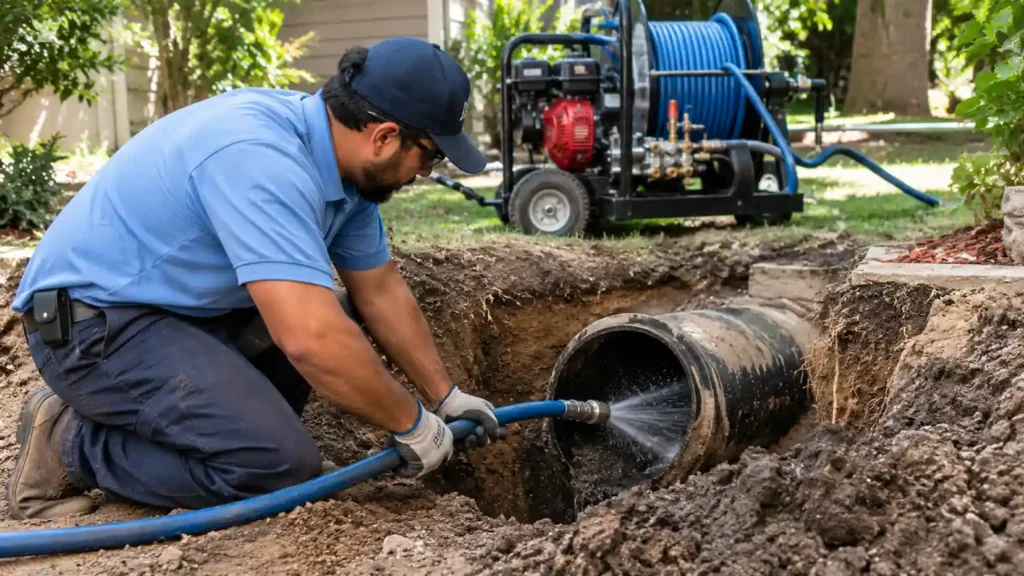
At EZ Hydro Jetting Austin, our main line hydro jetting service clears that wall layer with high-pressure water, but only after a camera pass confirms the pipe can safely handle the pressure. If the camera finds a cracked or displaced section, we explain the repair first.
How to Choose a Plumber for Sewer Odor in Austin
Choosing a plumber for sewer odor comes down to whether the company diagnoses before it sells. Five criteria separate a diagnosis-first provider from one that defaults to a standard repair:
- Asks where and when the smell appears before quoting a price
- Uses camera inspection instead of guessing at the cause
- Shows you the footage and explains what it means
- Separates trap, seal, and vent fixes from line cleaning
- Understands Austin hard water, clay soil, and older housing stock
Unlike other providers who start off with a snake or another quote, we begin with the camera. Cleaning a pipe which requires repair or repairing a pipe which only requires cleaning is a waste of money and keeps the smell there. Request for the video first before accepting any quote because a visible recommendation is easier to assess than an invisible one.
Austin Conditions That Make Sewer Odor More Likely
The environment and conditions in Austin make sewer odor possible in certain circumstances. The hot summers dry up the traps, while clay soil motion may cause the movement of sewer joints in neighborhoods like Hyde Park, Travis Heights, and Clarksville.
A plumber for sewer odor who is dealing with such neighborhoods should be prepared for old cast iron or clay tiles, which will be coated with decades of mineral scales and joint movements, so camera inspection becomes even more necessary before applying any pressure.
The private lateral between the house and the city main becomes the responsibility of the property owner, according to Austin City Code, and the crack causing the gas release is something that needs to be fixed by the property owner.
PVC sewer systems in newer subdivisions are not faced with the same structural problems, but they have the same dry traps, venting problems, and wall layers formed on them. A newer house with the odor requires the same diagnosis just with different possible reasons.
What Happens After the Source Is Found
The solution comes after the source is identified. A dry trap requires water or a trap primer. A worn out wax ring requires a new seal. A clogged vent requires clearance. A buildup in the main line requires hydro jetting, while a damaged or dislocated section of the pipe requires structural repair prior to cleaning.
A plumber for sewer odor dealing without carrying out the identification process can make mistakes in diagnosis, hence making the situation reappear. Request the repair and cleaning to be provided separately so that each cost can be associated with a camera result.
A camera run after the service ensures that the problem is solved and leaves the camera footage of the line as proof of work done. This allows for informed decisions when the next period of maintenance arises.
Making the Right Call on Sewer Odor in Your Austin Home
Odors from the sewer system have their roots in somewhere, and tracking down those roots involves fewer guesses than the average homeowner anticipates. An example of a fixture whose refill is simple to do at home is one such task. Any kind of odor that recurs, increases, or accompanies slow drains should motivate a call to a plumber for sewer odor.
No matter what the cause ends up being, taking action before a backup occurs will always be more economical. Odor serves as a warning signal, which is sometimes given by the pipe before a drain becomes clogged.
Get a quote and let EZ Hydro Jetting Austin explain the right service path, whether that is a simple trap fix, a main line cleaning, or a repair recommendation backed by camera footage.