Yes, can heavy rain cause toilet backups, and in Austin, the conditions that make it happen are more common than most homeowners realize until it occurs. A sewer line operates under a designed flow capacity. When storm rainfall overwhelms the soil‘s absorption rate, water finds alternate pathways into the drainage infrastructure through cracked pipe joints, corroded connections, and deteriorating lateral lines.
The municipal sewer system faces the same pressure from the same storm. Public sewer mains serving Austin neighborhoods were designed for specific flow rates, and an intense rainfall event can push those mains past capacity. When that happens, the backup pressure travels backward through the property’s service lateral into the house rather than forward toward the treatment facility.
At EZ Hydro Jetting Austin, we see this pattern consistently after significant Austin storms: properties that back up during rain rarely have a healthy sewer line. The storm pressure reveals a restriction or structural vulnerability that was already there. Removing that pre-existing condition is what makes the difference between a property that holds up during the next storm and one that backs up again under the same conditions.
Why Austin’s Storm Patterns Make Sewer Backups More Likely
Austin receives a disproportionate share of its annual rainfall in short, intense events rather than slow, steady precipitation spread across the year. That pattern matters for sewer infrastructure because the rate at which water enters the ground and drainage systems during an intense storm is far higher than what the soil can absorb or what aging pipe networks were designed to handle simultaneously.
The Edwards Plateau geology west of Austin creates runoff conditions that accelerate water movement toward lower-elevation neighborhoods during storm events. Properties near Barton Creek, Shoal Creek, Waller Creek, and their tributaries sit in areas where storm volume reaches drainage infrastructure quickly and with significant force. Sewer lines in those corridors face hydraulic pressure during storms that lines in drier regions of the country rarely experience.
Older Austin neighborhoods compound that exposure with infrastructure age. Sewer laterals in established areas like Hyde Park, East Austin, South Congress, and Clarksville may have been installed fifty or sixty years ago. Pipe joints that have shifted over decades, root intrusion from mature tree canopy, and corrosion in older cast iron and clay tile lines all create the vulnerabilities that storm pressure finds and exposes.
The Difference Between a Municipal Backup and a Property-Side Problem
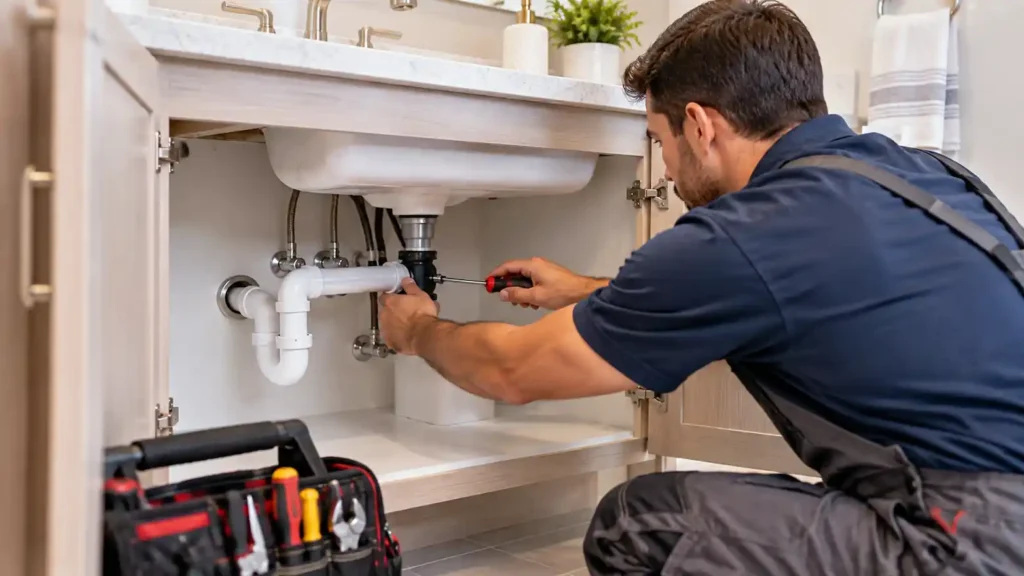
Not every heavy rain can cause toilet backups originates inside the property’s own drain system, and distinguishing between the two determines what the right response is. A municipal backup occurs when the public sewer main reaches capacity and backward pressure travels through the service lateral into the building. A property-side backup occurs when a restriction or structural condition inside the property’s own line creates the failure point under storm conditions.
The timing of when heavy rain can cause toilet backups provides the most accessible diagnostic signal before any camera goes into the pipe. A backup that resolves completely within two to four hours of the storm ending, with no residual slow drainage or gurgling sounds from fixtures, is more consistent with municipal pressure than with a property-side restriction. A backup that persists after the storm has passed, or that leaves drains running slowly for days afterward, points toward a condition inside the property’s line that the storm pressure pushed past its functional threshold.
Multiple fixtures backing up simultaneously during the storm points toward the main sewer line rather than any individual branch drain. A ground-floor toilet backing up at the same time a floor drain shows standing water and a utility sink slugs is the main line expressing the same restriction through every connected fixture. That pattern is not a coincidence. It is the same pressure event showing up at every low point the line connects to.
What Pre-Existing Conditions Can Heavy Rain Cause Toilet Backups to Expose in Austin Sewer Lines
Mature live oaks, cedar elms, pecans, and other established Central Texas species send root systems toward moisture, and aging sewer lines with cracked or offset joints offer consistent access to that moisture year-round. Early to mid-stage root growth restricts the line without stopping daily flow. The restriction only becomes fully visible when storm pressure adds volume the partially blocked line cannot pass.
Grease accumulation in main sewer lines operates on the same principle. A kitchen line or main lateral that has never been professionally cleaned accumulates grease, soap film, and food residue in layers on the pipe wall over years. The line handles daily household flow at reduced capacity without an obvious symptom. Under storm pressure, that reduced capacity becomes zero, and sewage surfaces at the lowest fixture.
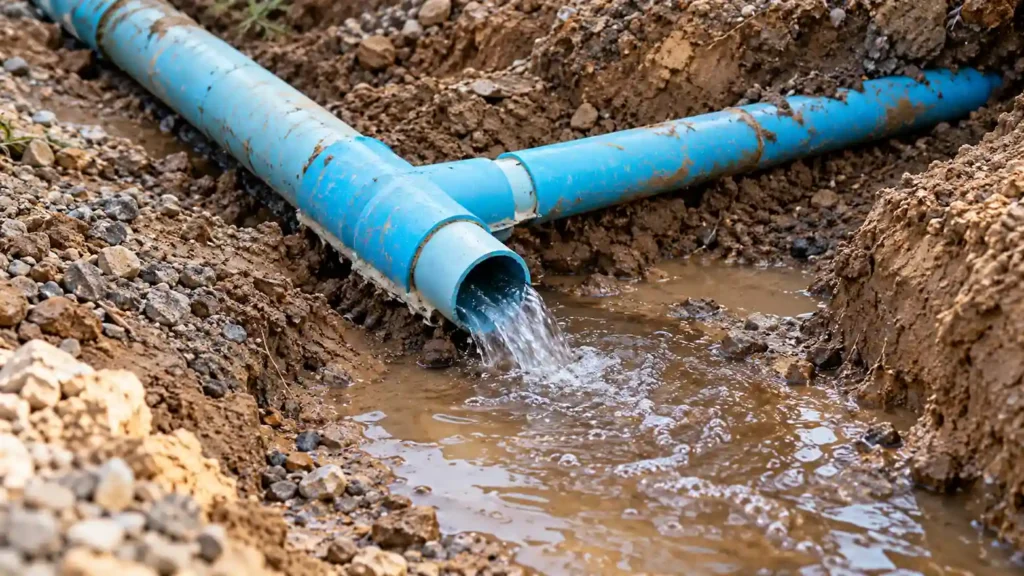
Inflow through cracked joints is the third common condition. Pipes with deteriorating joints or hairline cracks in the pipe wall allow groundwater to seep into the sewer line steadily during dry conditions and rapidly during rainfall. That inflow volume adds directly to the sewage flow inside the line and can push a line with any restriction past its functional limit within minutes of a heavy rain beginning.
Can Heavy Rain Cause Toilet Backups Through Root Intrusion Alone
Root intrusion alone can help cause toilet backups even in a line with no grease buildup, no joint deterioration, and no other accumulation. A root mass that fills forty to sixty percent of the pipe interior restricts flow without stopping it entirely. Daily household wastewater passes through the remaining open section of the pipe without triggering a backup. Storm pressure that adds groundwater inflow volume to that same line fills the remaining capacity, and the restriction becomes total.
What makes root intrusion particularly difficult to anticipate is that it develops silently. A homeowner whose drain lines function normally through an entire dry season may have a root mass inside the main sewer line that has been growing for twelve to eighteen months. The first indication is often a backup during a significant rainfall event, at which point the root growth is already substantial enough to block the line under added pressure.
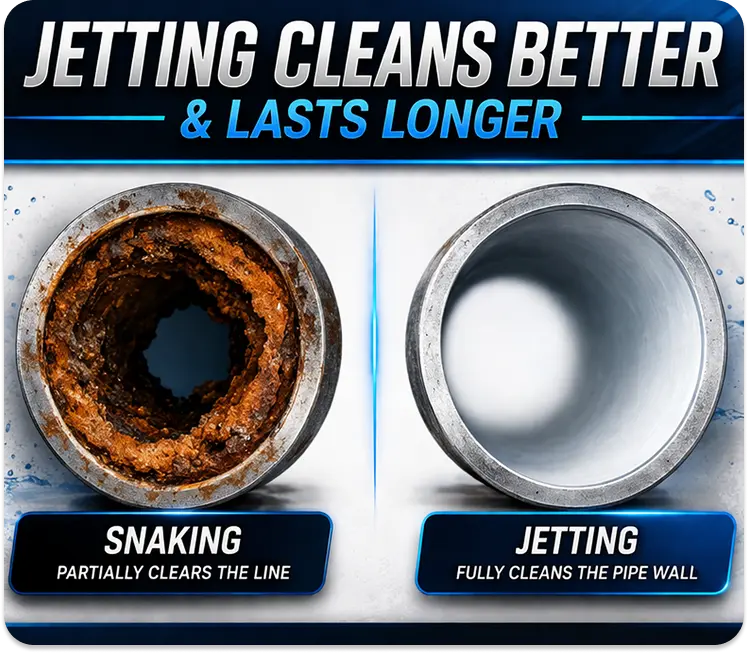
High-pressure jetting removes root material from inside the pipe and restores the full interior diameter of the line. It does not close the structural entry point the roots came through, and that distinction matters. Camera inspection after clearing root intrusion identifies whether the cracked joint or displaced pipe section requires a separate structural repair. Without that repair, root regrowth through the same opening is a question of when, not whether.
What a Camera Inspection Confirms After a Rain-Related Backup
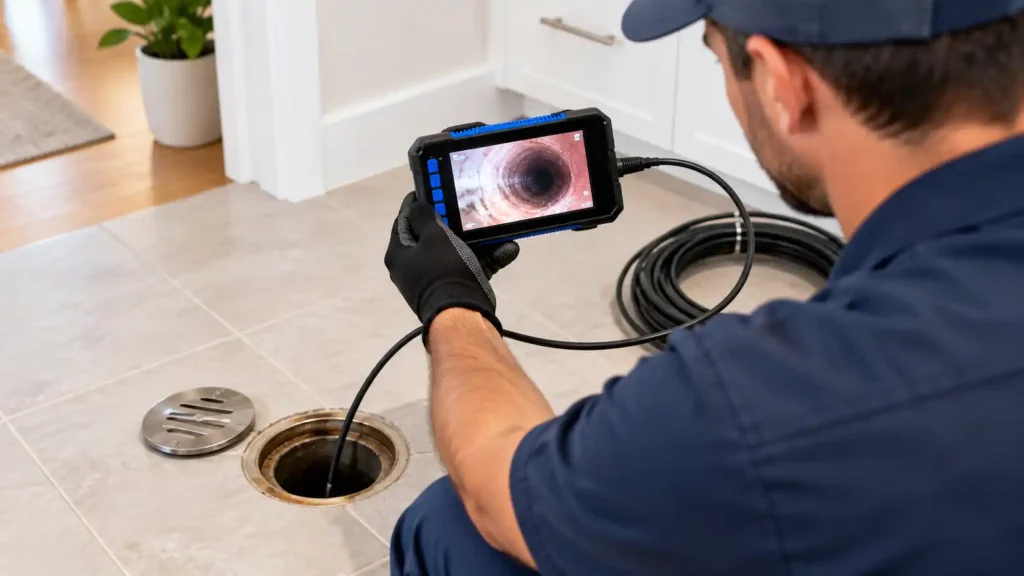
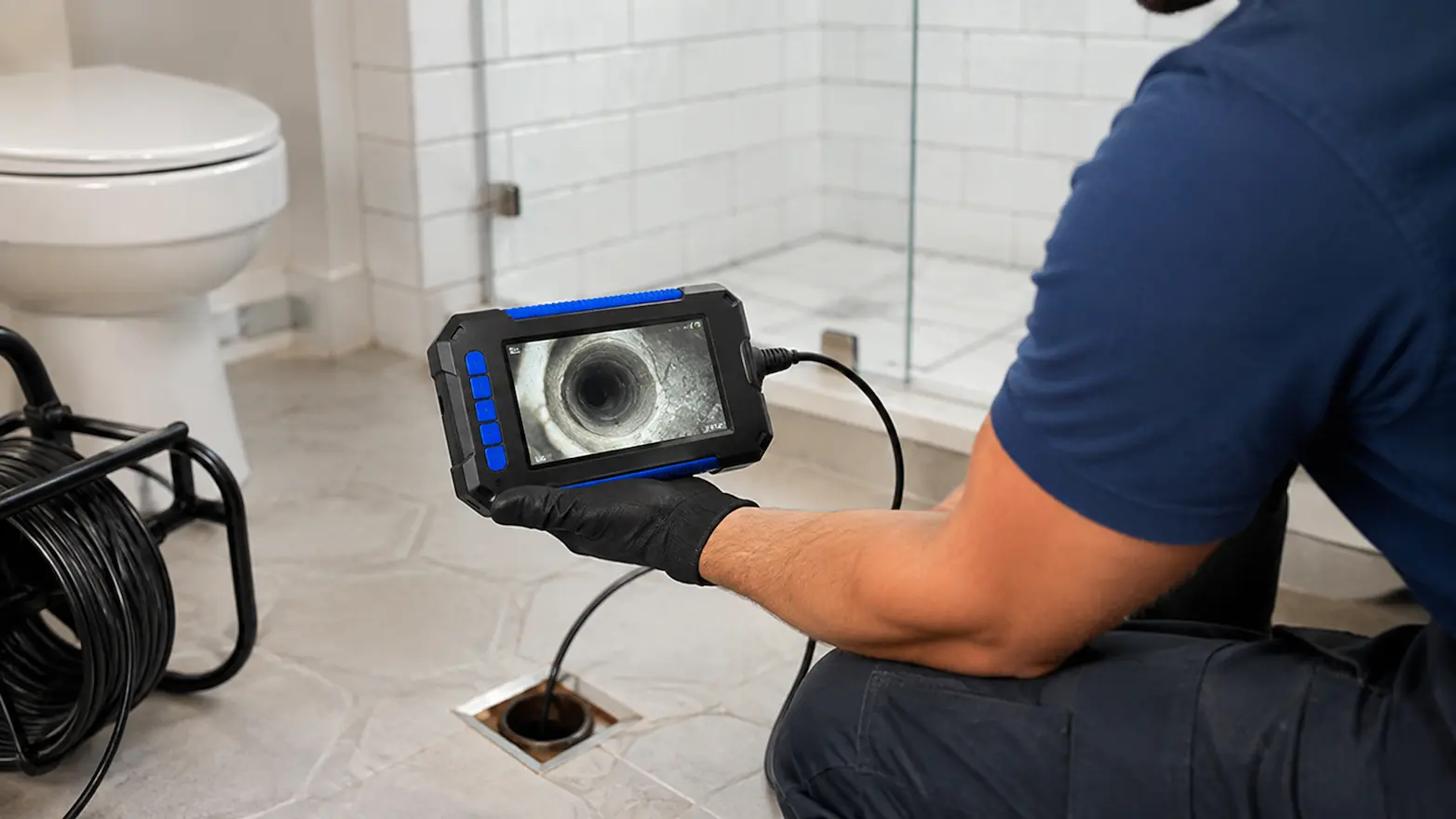
A camera inspection after a can heavy rain cause toilet backups situation provides the only reliable way to distinguish between a property-side problem and a municipal system issue, and to identify specifically what made the line vulnerable to the storm pressure. Without that visual step, any service recommendation is built on what seems most likely rather than what the pipe actually shows.
The camera reveals pipe material, interior wall condition, joint integrity, root intrusion presence and density, grease layer thickness, and whether any section has collapsed, offset, or deteriorated enough to allow significant groundwater entry. For Austin properties with sewer lines installed before the 1980s, that picture frequently explains a pattern of previous backups that appeared to be isolated events but were actually the same underlying condition expressing itself each time storm pressure reached a certain threshold.
The inspection also determines whether high-pressure jetting is the appropriate next step or whether structural repair needs to happen first. A pipe with severe joint displacement or a collapsed section may not support jetting pressure without worsening existing damage. Knowing that before scheduling a service call protects the line and the property from a well-intentioned service that makes the structural condition worse. Our HD camera inspection service is available as a standalone evaluation before any high-pressure work is scheduled.
Austin Emergency Hydrojetting: When Jetting Is the Right Post-Storm Response
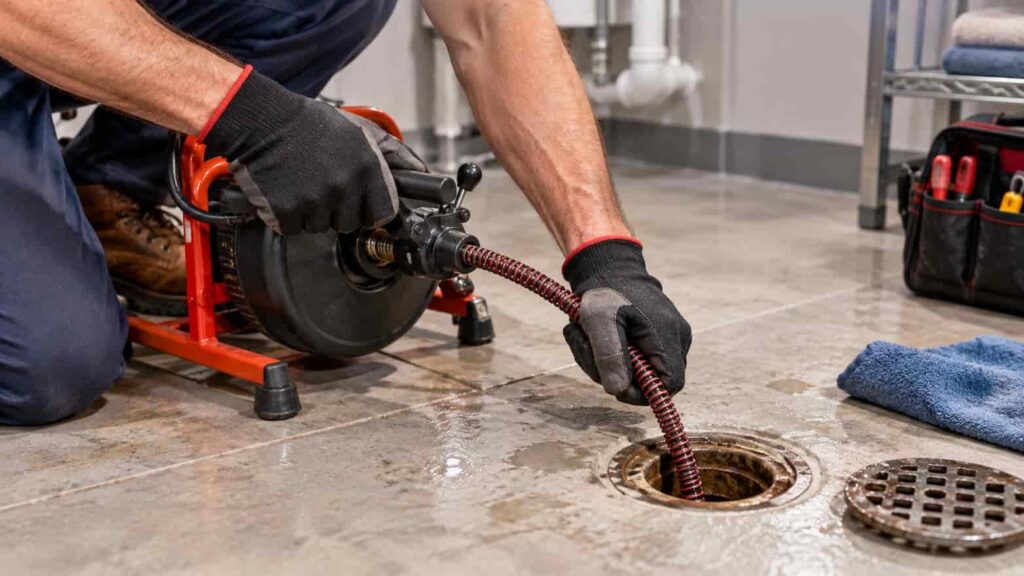
High-pressure sewer jetting is the right post can heavy rain cause toilet backups response when a camera inspection confirms that the backup was driven by a restriction inside the property’s line rather than exclusively by municipal system pressure. Root intrusion, grease accumulation, and mineral scale buildup all respond to high-pressure water cleaning with the appropriate nozzle configuration. The service restores the interior diameter of the line and removes the condition that made the property vulnerable to storm pressure in the first place.
Jetting is not appropriate as an immediate response during an active storm event. The source of the backup may be municipal system pressure rather than a property-side restriction, and cleaning a line that is currently under upstream pressure does not address the source of the backup. Waiting until the storm passes and confirming that the backup source is inside the property line is the correct sequence before scheduling a jetting service.
Pipes with structural damage from soil movement, root intrusion through severely cracked joints, or sections that collapsed during or before the storm require camera assessment before any high-pressure cleaning. Applying jetting pressure to a structurally compromised pipe without that knowledge risks worsening the damage rather than resolving the restriction. The camera step is what ensures the service fits the actual condition of the line.
Making the Right Call After a Rain-Related Toilet Backup
Can heavy rain cause toilet backups in Austin properties that showed no drain problems during dry months, and the experience leaves most homeowners uncertain about whether the problem is theirs to fix or the city’s to address. The answer is almost always some version of both, and the part the property owner can control is the condition of the line on their side of the connection.
A camera inspection is the correct first step for any property that has experienced a can heavy rain cause toilet backups situation, regardless of whether the backup cleared on its own after the storm or required intervention. The inspection identifies what the line contains, confirms the source of the vulnerability, and produces a specific recommendation rather than a general one.
Contact EZ Hydro Jetting Austin to schedule an inspection and confirm whether high-pressure jetting or another drain service is the right next step for your property after a rain-related backup.