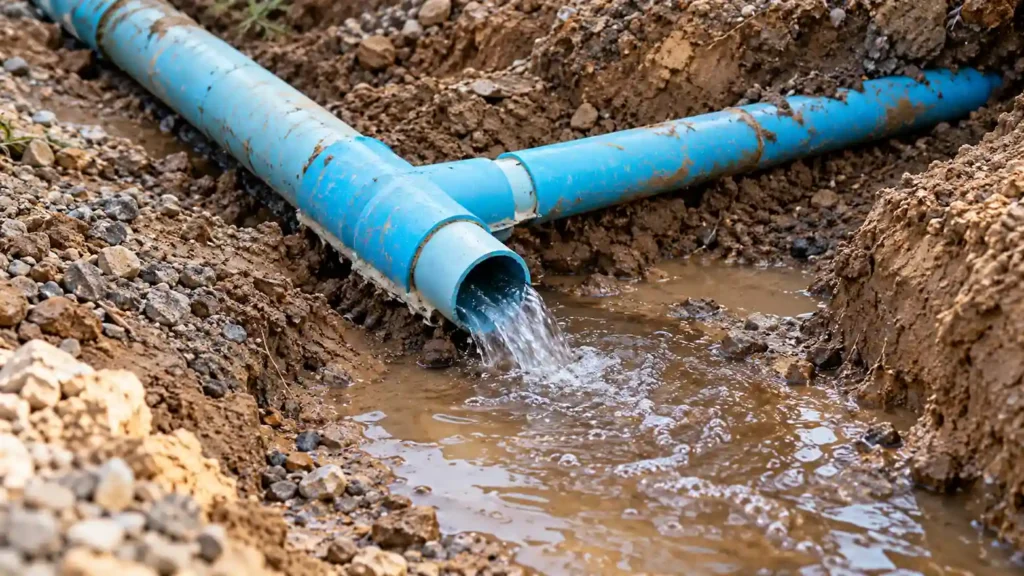
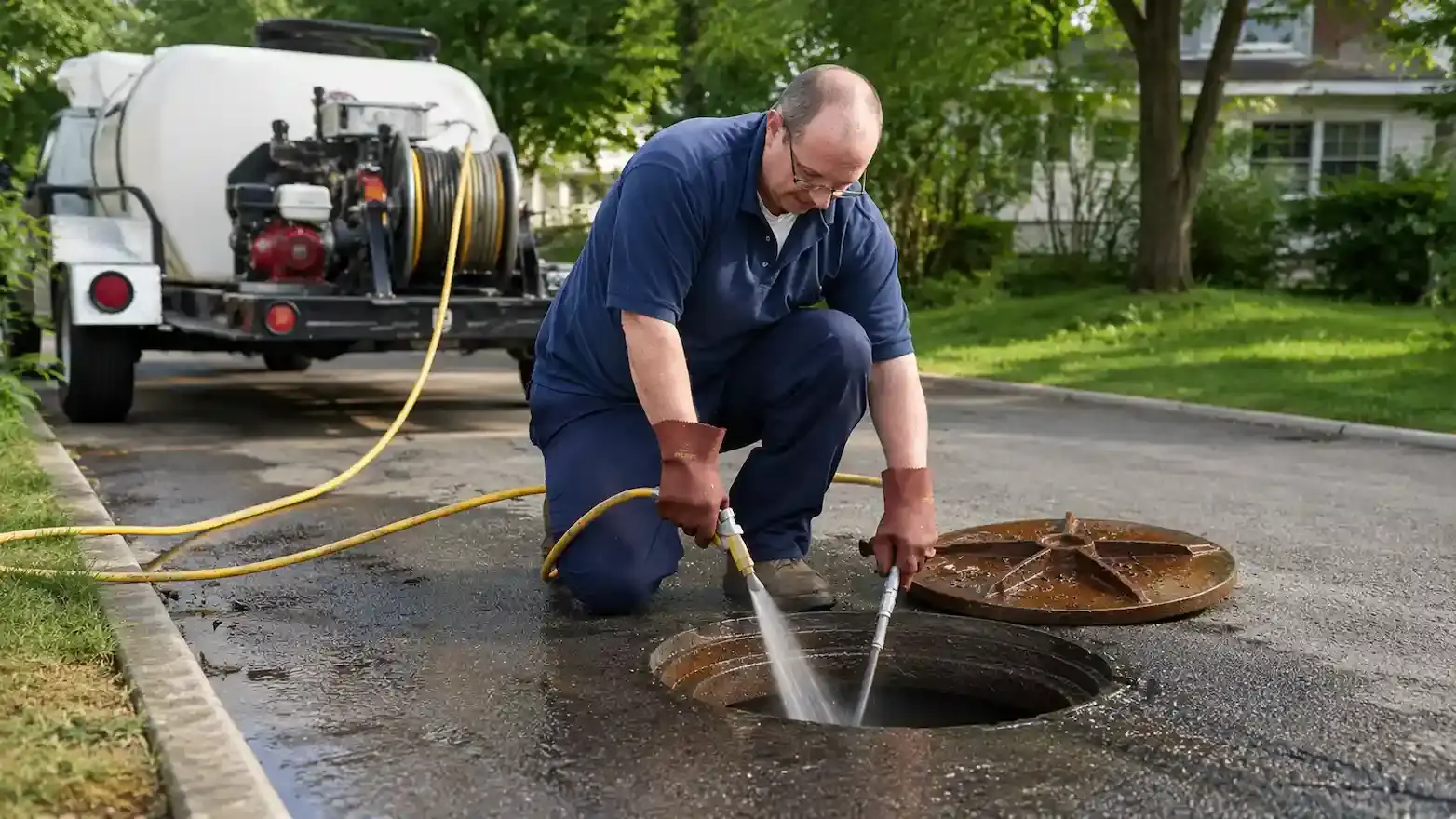
Picture a garden hose aimed straight down a pipe, except the water leaves the nozzle at a pressure strong enough to strip years of buildup off the interior wall rather than just splashing through. That’s the basic idea behind jetting sewer lines, and it explains why the method holds up so much better than a cable that only shoves a blockage out of the way. The coating stays put after a cable pass. Jetting actually takes it off.
Around Austin, this conversation about jetting sewer lines usually starts once a line has been cleared more than once for the exact same complaint. A single backup often responds fine to a simple cable job. A line that backs up again within a few weeks of that same service is pointing at something else entirely, usually a buildup problem rather than a single stubborn object lodged somewhere.
At EZ Hydro Jetting Austin, jetting sewer lines is treated as a decision tied to what the pipe is actually showing, never a default reflex for every call that comes in. Before pressurized water enters the conversation, we want to know the pipe’s condition, what’s actually causing the restriction, and whether the line can genuinely handle that kind of cleaning.
The Mechanics Behind Jetting Sewer Lines
A jetting unit builds pressure and forces water through a hose that ends in a nozzle built to fire water in more than one direction simultaneously. Forward jets punch through whatever’s blocking the path, while jets angled backward and to the sides scour the pipe wall as the hose gets reeled back in.
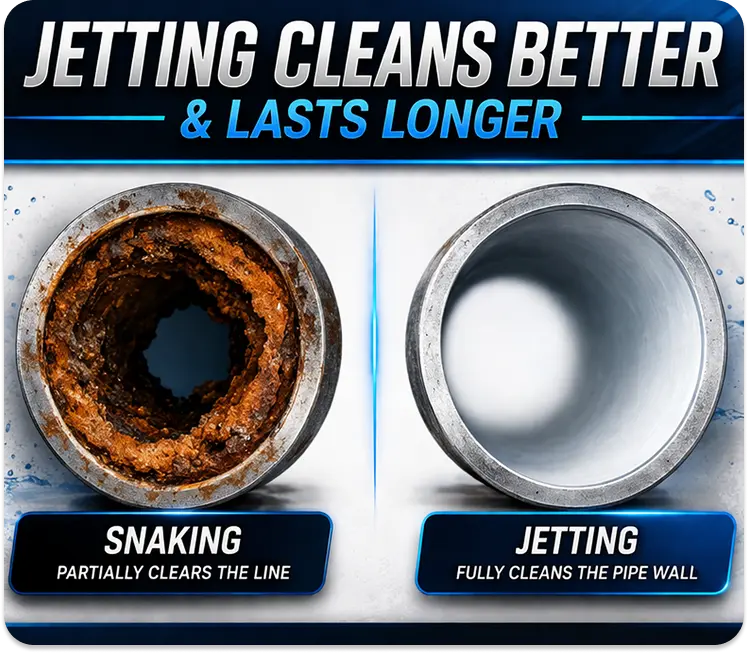
That dual action is the whole reason jetting sewer lines outperforms plain mechanical clearing. A cable or auger shoves a hole through the blockage and calls it done, leaving grease, sludge, and mineral scale clinging to the walls untouched. Jetting handles both halves of the problem, the blockage itself and whatever’s been building up around it.
Pressure settings shift considerably from job to job, and matching the setting to the actual pipe matters far more than cranking up to the highest number the equipment offers. Grease buildup accumulated over years calls for a different touch than a single root pushing through one joint.
Why A Camera Goes In Before Any Pressure Does
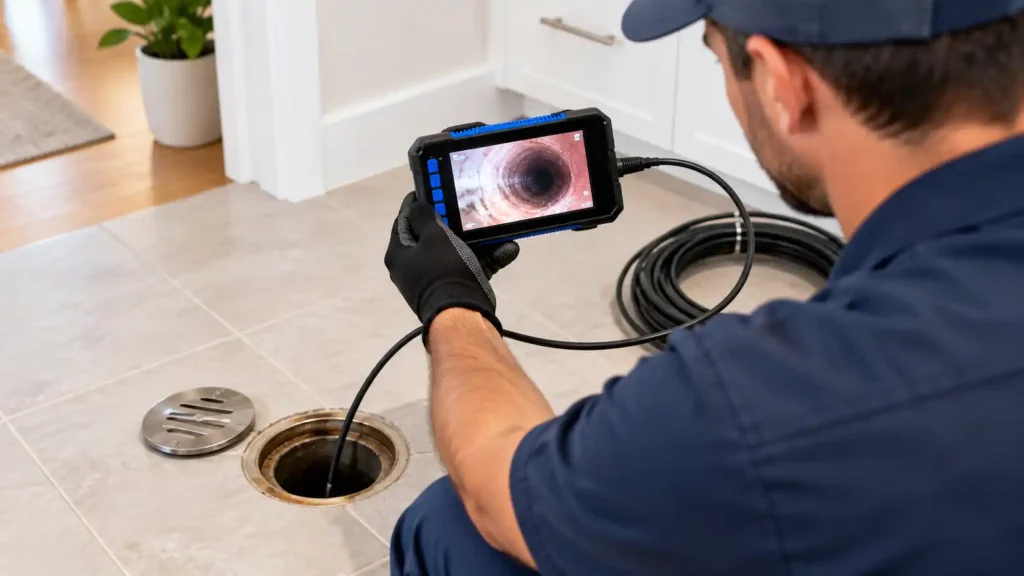
Firing pressurized water down a sewer line without knowing what shape that pipe is amounts to hoping for the best dressed up as a plan. Camera inspection swaps that hope for an actual picture, showing buildup thickness, joint condition, and any stretch of pipe that might buckle under pressure.
That step carries the most weight on older lines, where pipe material, past patch jobs, and years of shifting ground can all change how a pipe reacts once water starts moving through it at speed. Skipping the camera means a technician is essentially crossing their fingers instead of confirming anything.
Jetting sewer lines without that groundwork can genuinely damage a pipe already weakened underneath, which is exactly why the camera comes first whenever nobody’s entirely sure what condition the line is really in. You can read more about how we handle this work on our main line hydro jetting page.
How Pipe Material Changes The Whole Approach
Sewer lines throughout Austin show up in a range of materials, and each one handles pressurized cleaning its own way. Modern PVC shrugs off a full range of pressure without much fuss, while older clay, cast iron, or Orangeburg pipe usually calls for a gentler hand depending on how it’s held up.
Clay that’s already cracked or badly deteriorated may need lower pressure and a narrower nozzle spray to avoid turning a small problem into a structural one. Cast iron eaten by corrosion behaves much the same way, since pressure hitting a weak spot can push things from bad to considerably worse.
Responsible jetting sewer lines work means shaping the approach around whatever the camera actually reveals about material and condition, rather than treating every pipe identically regardless of age or what it’s made from.
Jetting Versus A Standard Cable Job
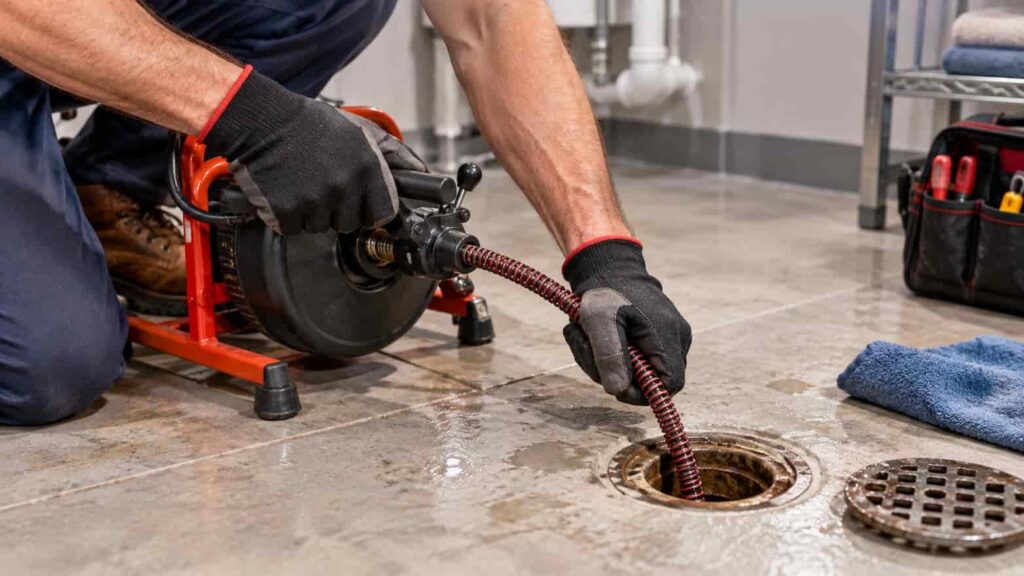
Mechanical rodding, running a cable or auger through to break up a blockage, still makes sense for a single, isolated clog with no history of coming back. It’s quicker and simpler for straightforward cases where buildup coating the wall isn’t really part of the picture.
That equation flips once a line has needed clearing more than once for the same complaint. At that point a cable that only opens a path rarely holds for long, since the actual coating stays behind and keeps trapping fresh debris.
Jetting sewer lines tends to be the better call for repeat problems, heavier buildup, or lines serving properties running well above typical daily use, since it addresses the root cause rather than just the symptom showing up at the surface again and again.
Figuring Out How Often A Line Needs This
There’s no universal answer here, since usage habits, pipe age, and nearby tree roots all shape how quickly buildup piles up. The Jetter Code of Practice lays out standard guidance for matching cleaning frequency and technique to a line’s actual condition.
Commercial properties running heavier daily use, restaurants and multi-tenant buildings especially, tend to benefit from scheduled maintenance rather than waiting for the next backup to force everyone’s hand. Residential lines generally need attention on a longer cycle, though older homes with a known root history may need closer watching.
Treating jetting sewer lines as preventive maintenance for higher use properties tends to cost noticeably less over time than reacting to emergency backup after emergency backup, since a planned visit beats a panicked one every time.
Signs A Line Isn’t Ready For This Kind Of Cleaning
A pipe already showing collapse, a serious belly, or joints separated more than a quarter of the pipe’s own diameter simply isn’t a good candidate for standard pressure cleaning. Forcing water into a section that’s already structurally compromised can push a manageable problem into a much bigger one.
Sewage surfacing across multiple fixtures at once, especially paired with a noticeably sunken patch of yard tracking the pipe’s route, often points toward structural failure rather than an ordinary blockage. Signs like these deserve inspection before any cleaning method, jetting or otherwise, ever gets applied.
A provider worth trusting should say plainly when jetting sewer lines isn’t the right first move. Sometimes the honest call is that the line needs repair or lining before it can handle pressure at all.
Sorting Out Who’s Actually Worth Calling
| Situation | Basic Rodding | Jetting Sewer Lines |
| First-time clog, isolated | Usually sufficient | Rarely needed |
| Recurring backup, same line | Temporary fix at best | Addresses the coating causing repeats |
| Older or unknown pipe condition | Lower pressure risk | Inspection recommended first |
| Commercial or high-use property | May need frequent repeats | Often paired with scheduled maintenance |
Look for a team willing to explain what the camera actually turned up, why a particular pressure level makes sense for jetting sewer lines, and what would change their recommendation if the pipe’s condition looked different. That kind of explanation signals real judgment rather than a script recited on every call.
Getting A Sewer Line Jetted The Right Way
The right fix for a sluggish or backing-up sewer line comes down to the pipe’s material, its actual condition, what’s causing the restriction, and how many times the problem has already resurfaced. Basic rodding, camera inspection, and jetting sewer lines each solve a different piece of that puzzle, and matching the method to the real situation keeps today’s fix from turning into next month’s repeat call.
At EZ Hydro Jetting Austin, we’d rather look at the line first and tell you what we actually find than default to pressurized cleaning for every backup that comes through the door.
Request a drain evaluation built around the actual blockage. Reach out through our contact page, and we’ll walk through what your sewer line is genuinely dealing with before anything gets scheduled.